
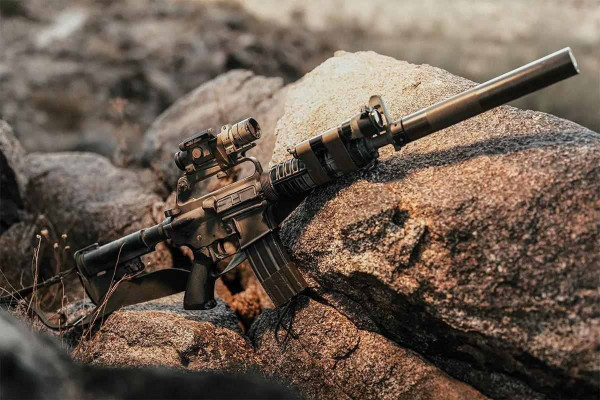
1993: Delta Had Already Built the Modern Carbine
Posted by Charlie's Custom Clones Staff on Aug 29th 2026
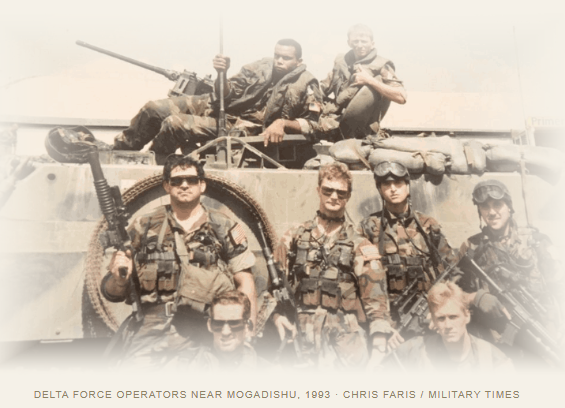
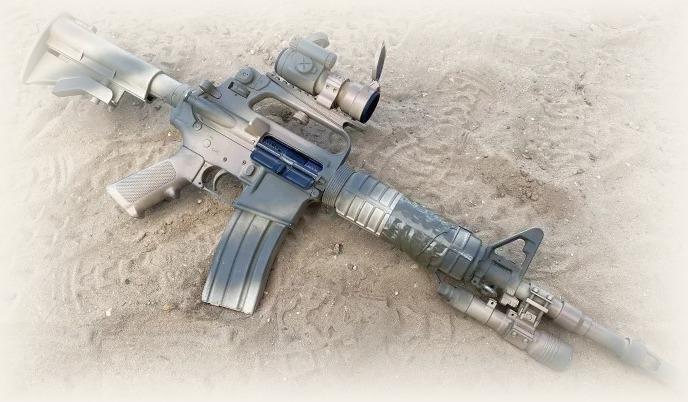
Most histories of the modern American carbine start with the M4. That is understandable, but it misses the more interesting transition that came immediately before it.
The M4 did not appear from nowhere in 1994. Colt and the U.S. military had been working on carbine concepts for years, including the XM4 program in the 1980s. What Delta’s early-1990s rifles show is something different: the operational logic of the modern carbine arriving before its standardized form.
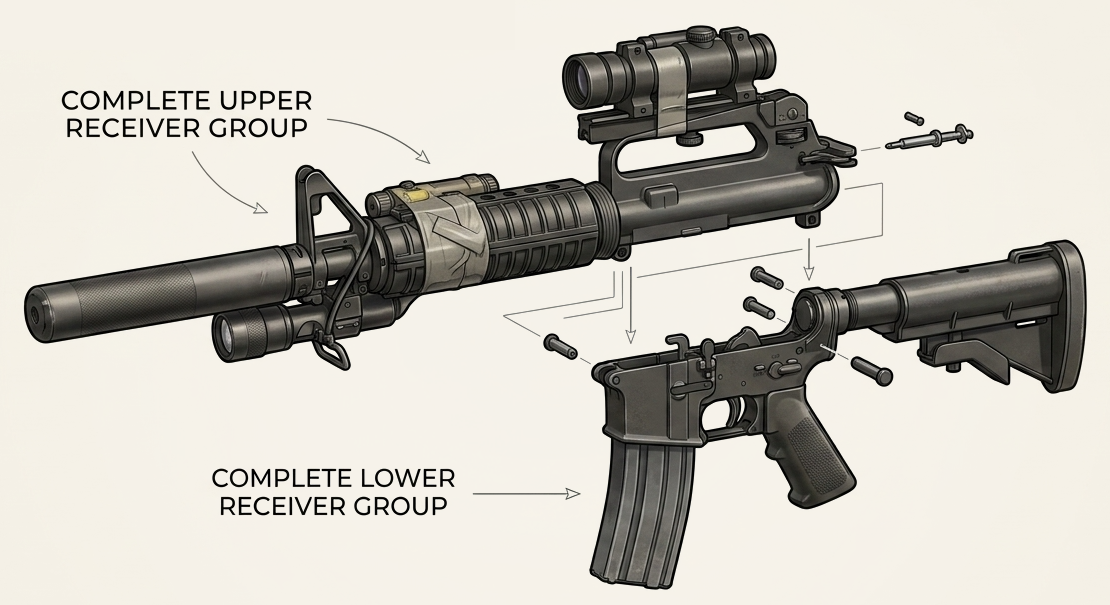
Look at a Delta carbine from the Mogadishu era without being distracted by the fixed carry handle. There is an electronic optic. There is a dedicated white light. There is a compact 14.5-inch carbine barrel. There is a suppressor treated as part of the weapon rather than an afterthought. Those four choices remain recognizable on a modern special-operations carbine three decades later.
The Delta carbine sits at the hinge point between the M16A2 era and the later modular M4A1/SOPMOD era: a rifle from the old visual world carrying the design priorities of the new one.
The carbine was already evolving. Delta accelerated the idea.
1993 was not the beginning. The Army’s XM4 program was already underway in the mid-1980s; Mogadishu gives us a rare combat snapshot of special operators adapting transitional Colt carbines around mission needs. In fiscal 1994, the Army then awarded contracts totaling 24,000 M4/M4A1 carbines, including the M4A1 flat-top variant for special operations.
Colt receives a procurement contract for 40 XM4 carbines for testing and evaluation. The compact M16-family carbine is already a formal military development path.
Delta carbines show electronic sights, white lights, and suppression assembled around mission requirements while the fixed carry handle still defines the receiver.
Army contracts total 24,000 M4 variants; the M4A1 for special operations adds the Picatinny upper that makes accessory mounting part of the weapon’s architecture.
Primary-source trail: Department of the Army Historical Summary, FY1994. For the XM4 development chronology, see the historical sourcing summarized by the U.S. Naval Institute.
The architecture was old. The operating idea was new.
A full-size M16A2 began from a different baseline: iron sights, a 20-inch barrel, and a rifle that arrived largely complete from the factory. Delta’s carbine work inverted that relationship. The Colt became the host; the mission determined what was added to it.
The high-mounted Aimpoint looks awkward to eyes trained on flat-top receivers, but it solved a real problem: fast, both-eyes-open sighting on a receiver with no rail. The white light looks improvised because it was. The reflex suppressor looks specialized because it was engineered around a specific barrel and front-sight-base geometry.
Those workarounds are why the rifle matters. Later M4A1 and SOPMOD developments did not create the needs; they gave the solutions common interfaces.
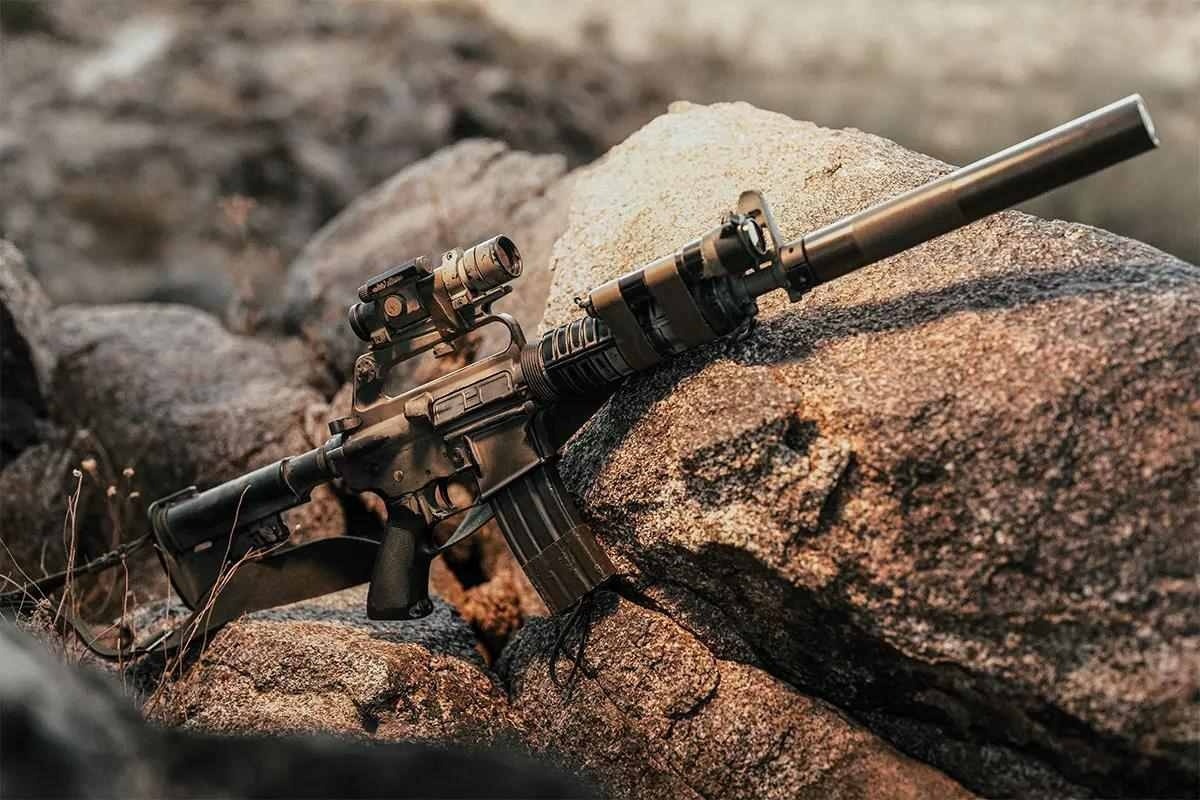
The receiver identifies the branch. The suppressor geometry identifies the system.
For clone builders, Colt 723 and Colt 727 are useful shorthand. Gordon’s best-documented branch sits on the 723/C7 side, with the simpler A1-style rear sight. The 727 represents the A2 fixed-carry-handle branch, with the fully adjustable A2 rear sight.
That distinction matters, but it is only half the identification. A rifle can carry the right 14.5-inch proportions, optic, light, and long suppressor silhouette—and still belong to the wrong historical branch if the receiver does not match the rifle being claimed.
The reverse is equally important. A correct-looking receiver does not rescue an incorrect suppressor system. The upper identifies the visual family; the barrel/collar/suppressor relationship identifies the mechanical family. Serious clone work has to get both right.
Which receiver branch am I reproducing—and is the suppressor geometry correct for it?
There are three “Gordons” because collectors were solving three different problems.
Clone culture did not settle on three variants because anyone at Colt or Delta named them that way. The variants emerged because collectors valued different kinds of fidelity—and because, for years, the historically correct suppressor was extraordinarily difficult to obtain. The Type 01 / 02 / 03 language below is a useful CCC collector framework, not military nomenclature.
The purist: 14.5-inch / true M4 geometry
This is the build the absolute purists chased: the 723/C7 historical direction, a 14.5-inch carbine barrel and the correct OPS Inc-style M4 reflex suppressor geometry. Ron Allen continued making M4 suppressors after OPS Inc, but in very small runs. For years, Type 01 was possible; it was simply difficult enough that relatively few collectors could finish one.
Collector standard: historical receiver branch + 14.5-inch barrel + true M4 suppressor system. No substitute geometry.
The screen-correct carbine: Hollywood becomes its own artifact
Not every clone collector is pursuing the narrowest historical standard. Black Hawk Down made the A2 carry-handle silhouette a cultural artifact of its own, and many enthusiasts intentionally reproduce the rifle they remember from the screen. That is no stranger than building a Blood Diamond rifle because the movie configuration itself has become collectible. For that later screen-correct optic presentation, CCC documents the Aimpoint PRO / M68-style Wilcox combination.
Collector standard: reproduce the cultural artifact honestly. “Hollywood correct” is a real goal; it is just a different goal from “Gary Gordon correct.”
The Potomac 12.5-inch / AEM5 interpretation
When true M4 suppressors were scarce, the much more obtainable AEM5 gave builders another path to the long reflex-suppressor silhouette. Potomac Armory helped popularize the 12.5-inch version: shorten the barrel enough to package the AEM5 convincingly and keep the visual balance collectors wanted. It became a clone tradition of its own even though its barrel and mounting geometry differ from the original 14.5-inch M4 system.
Collector standard: a deliberate, practical interpretation—not a claim that 12.5 inches and an AEM5 are the original Delta dimensions.
The useful insight is that the clone world did not arrive at one Gordon Carbine. It arrived at three answers to three collector priorities: historical fidelity, screen fidelity, and practical availability. Once those priorities are named, arguments that used to sound like disputes over “correct” and “incorrect” become much easier to understand.
That distinction also explains why Charlie’s has more than one article on the subject. Our earlier Gordon Carbine: History, Hollywood, and Homegrown traces the real rifle, the movie and the clone community, while the Gordon Carbine Build List breaks the configurations down at the parts level. This article asks the larger question: why did this transitional carbine matter in the first place?
For the movie-prop side of the story, see RECOIL’s The Guns of Black Hawk Down. Charlie’s earlier Gordon Carbine reference page also preserves the period when Ron Allen-made suppressors were increasingly scarce, Trajectory Arms production was arriving from Orem, Utah, and Potomac Armory offered the 12.5-inch Gordon barrel.
Scarcity shaped the Gordon clone almost as much as history did.
Clone rifles are often described as if collectors were choosing freely from a complete catalog of historically correct parts. They were not. For years, Ron Allen’s true M4 suppressors existed only in short production runs, while the AEM5 was far easier to find. That availability gap changed what people built.
The AEM manufacturing transition to Trajectory Arms beginning in 2022 changed availability. As production broadened, true M4-pattern suppressors became more obtainable through dealers and rifle OEMs, reopening the Type 01 path to collectors who previously had little realistic access to it.
This is why clone history has to include availability history. A configuration can become popular not because new evidence proves it correct, but because a certain barrel, suppressor, optic or mount becomes obtainable at the right moment.
CCC institutional history is reflected in our Gordon Carbine reference page. Allen Engineering’s current Gordon Carbines article explains why low M4 production and limited photography allowed the suppressor to fall into obscurity.
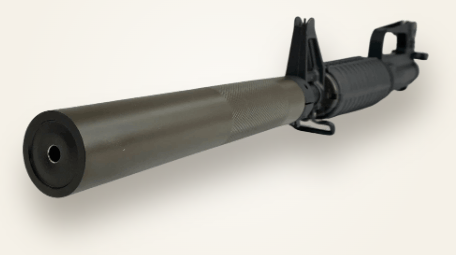
The suppressor is not an accessory to this story. It changes the geometry of the rifle.
Allen Engineering’s historical account clears up one of the longest-running points of confusion. The original OPS Inc suppressor did not receive a neat official commercial model designation. Allen Engineering uses the name M4-Delta today for that early configuration. It was designed in the early 1990s around the 14.5-inch Colt 723 carbine and its fixed front sight base.
The distinction matters because the M4-Delta and the later AEM5 do not mount the same way. The M4-Delta uses approximately 4.4 inches of barrel behind the muzzle, threads directly to the barrel and indexes at the rear on a two- or three-piece collar at the FSB. Allen Engineering’s current production version uses the long three-piece collar. The AEM5, by contrast, was developed later for the Mk12 family, uses less barrel overlap and normally works with a brake-and-collar arrangement.
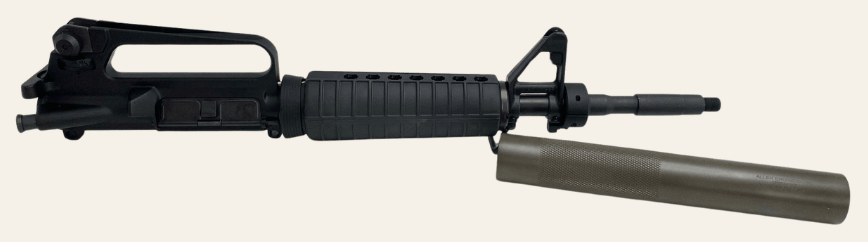
Three relationships, one system
The collar only makes sense when you can see the muzzle.
A tight crop of the collar can make it look like a decorative ring. Show the front sight base, collar, exposed barrel, and muzzle together, and the architecture becomes obvious: the suppressor travels rearward over that exposed barrel until the collar establishes the rear index.
The two images at right teach the same relationship from opposite directions: the physical assembly first, then the semi-transparent fit view.
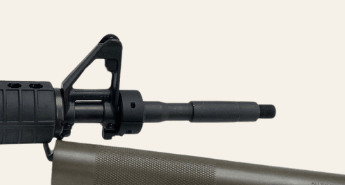
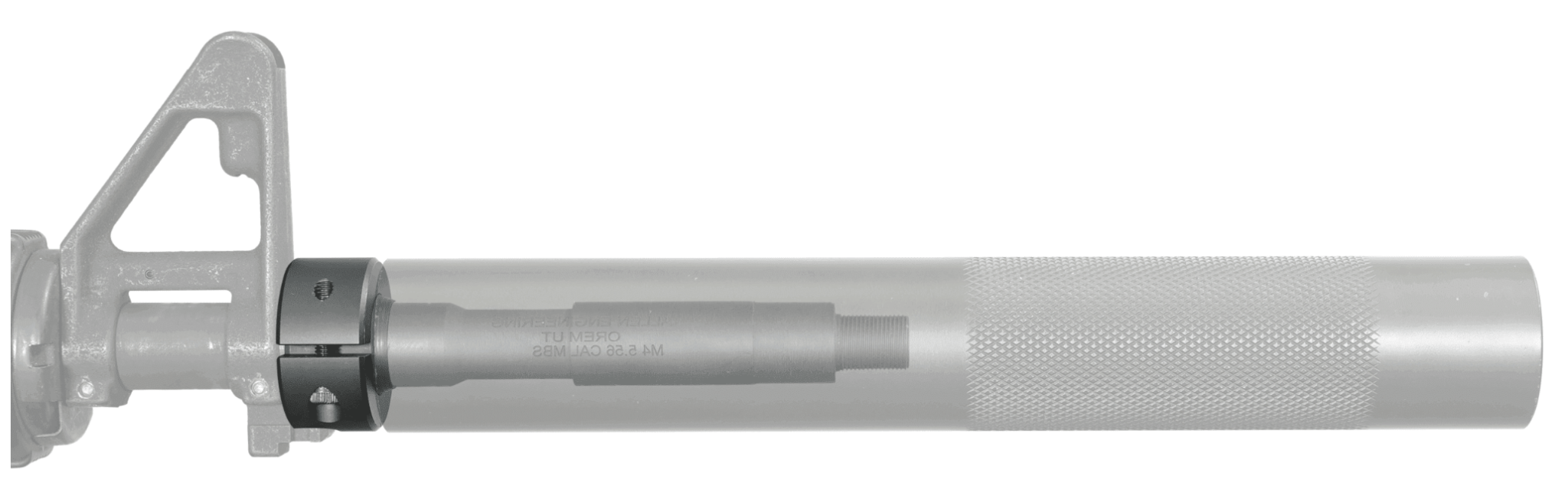
Technical source: Allen Engineering, “The Gordon Carbines”.
SOPMOD did not invent the need. It industrialized the solution.
It is tempting to describe every early Delta modification as a prototype for a later issued component. History is messier. The carry-handle optic mount was a workaround. Early light mounting was crude by later standards. The reflex suppressor was specialized and produced in tiny numbers. There was no universal rail interface tying the system together.
That is precisely the point. Delta had identified the capability stack before the military standardized the interfaces.
The 1994 M4A1 flat-top upper and later SOPMOD packages gave those categories a common mounting language. Delta’s carbine was not the final form; the mission requirements were simply visible before the interfaces caught up.
Charlie’s builds the A2 branch—and says so plainly.
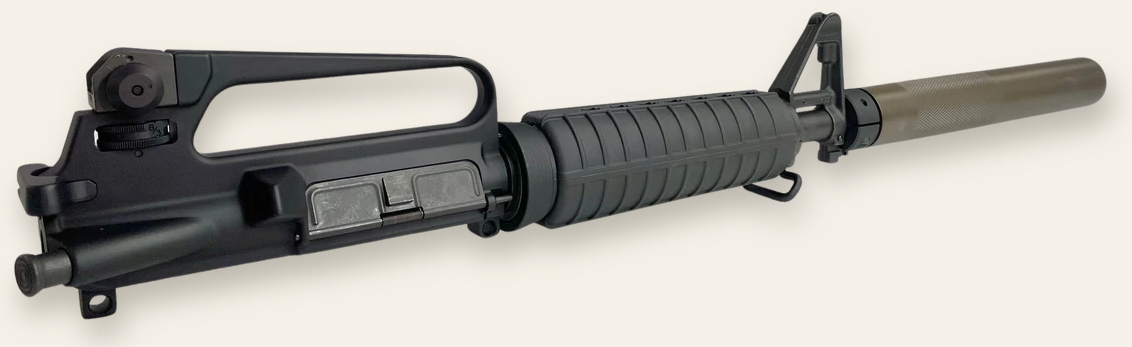
Only after the history is clear should the current CCC upper enter the story. Our Delta Carbine is not presented as Gary Gordon’s exact Colt 723. Gordon’s best-documented rifle belongs on the C7/A1-style branch. Charlie’s matched upper follows the A2/727-side visual family while preserving the 14.5-inch / M4-Delta architecture that defines the mechanical family.
Matched, not merely attached.
This is where historical research becomes shop practice. A reflex suppressor system can look correct while its critical relationships are wrong. Charlie’s treats the barrel, front sight base, collar, and suppressor as one assembly and checks the completed system for fit and alignment.
The difficult part of this clone is not finding a black A2 upper. It is getting the front-end geometry right.
The upper concentrates the historical geometry, the scarce suppressor interface, and most of the clone-specific assembly work. The lower and accessories can then be finished around a known-correct foundation.
CCC Delta Carbine A2 Upper — build sheet
- Upper receiver
- Fixed carry-handle A2 pattern
- Rear sight
- Integral adjustable A2
- Barrel
- Colt 14.5-inch SOCOM profile
- Barrel spec
- 1:7 twist · chrome-lined · 4150 CMV
- Gas system
- Carbine length
- Front sight
- Fixed A-frame FSB
- Handguards
- Short ribbed carbine
- Suppressor
- Allen Engineering M4-Delta / M4-D
- Mount
- Direct thread + long three-piece collar
- Assembly
- Complete upper · headspaced
- Fitment
- Barrel / collar / suppressor matched; alignment checked
The rifle is important because the problem set is still familiar.
Take away the carry handle and substitute modern interfaces; the priorities remain familiar. A contemporary special-operations carbine still has to move through vehicles and structures, deliver a fast sight picture, identify targets in darkness, and manage signature when the mission demands it.
The Delta carbine of the early 1990s was not the final form. It was an early moment when those requirements became visible on one rifle—and when the weapon began to be treated as a host for a mission system rather than a finished object.
A good clone copies a silhouette. A serious clone preserves the decisions that created it.
Related Charlie’s field notes
The Gordon Carbine: History, Hollywood, and HomegrownHow the real rifle, the movie and the clone community diverged. Gordon Carbine Build ListReceiver, barrel, suppressor, optic, light and lower-receiver choices. The Mk12 and the OPS Inc / AEM5 Suppressor EvolutionWhy the later 12th Model/AEM5 belongs to a different military lineage. The Mk18 Build SheetThe next major chapter: how the accessory-integrated carbine evolved into the rail-era CQBR.Primary & specialist references
Allen Engineering — The Gordon CarbinesM4-Delta history, dimensions, collar and AEM5 distinction. Department of the Army — Historical Summary, FY1994Contemporary Army record of the M4/M4A1 contract and special-operations flat-top variant. RECOIL — The Guns of Black Hawk DownUseful film-prop history for separating Hollywood configuration from historical rifles. CCC — Gordon Carbine referenceContemporary CCC record of Ron Allen scarcity, 2022 Trajectory Arms AEM production and Potomac Armory’s 12.5-inch Gordon barrel. Allen Engineering — AEM4 vs. M4-R vs. M4-DModern clarification of Allen Engineering’s M4 naming and the distinct M4-Delta configuration.Study the matched Delta Carbine upper.
For collectors pursuing the A2 branch, Charlie’s pairs a 14.5-inch Colt barrel, A2 carry handle, long three-piece collar and M4-Delta suppressor as one matched system.
View the CCC Delta Carbine A2 upper →