
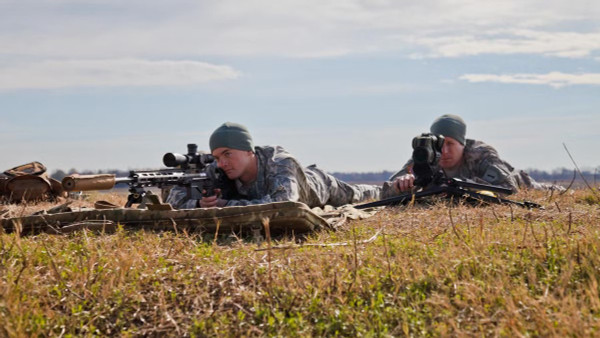
The XM2010 Army Sniper Rifle
May 31st 2026
Last updated: May 31, 2026
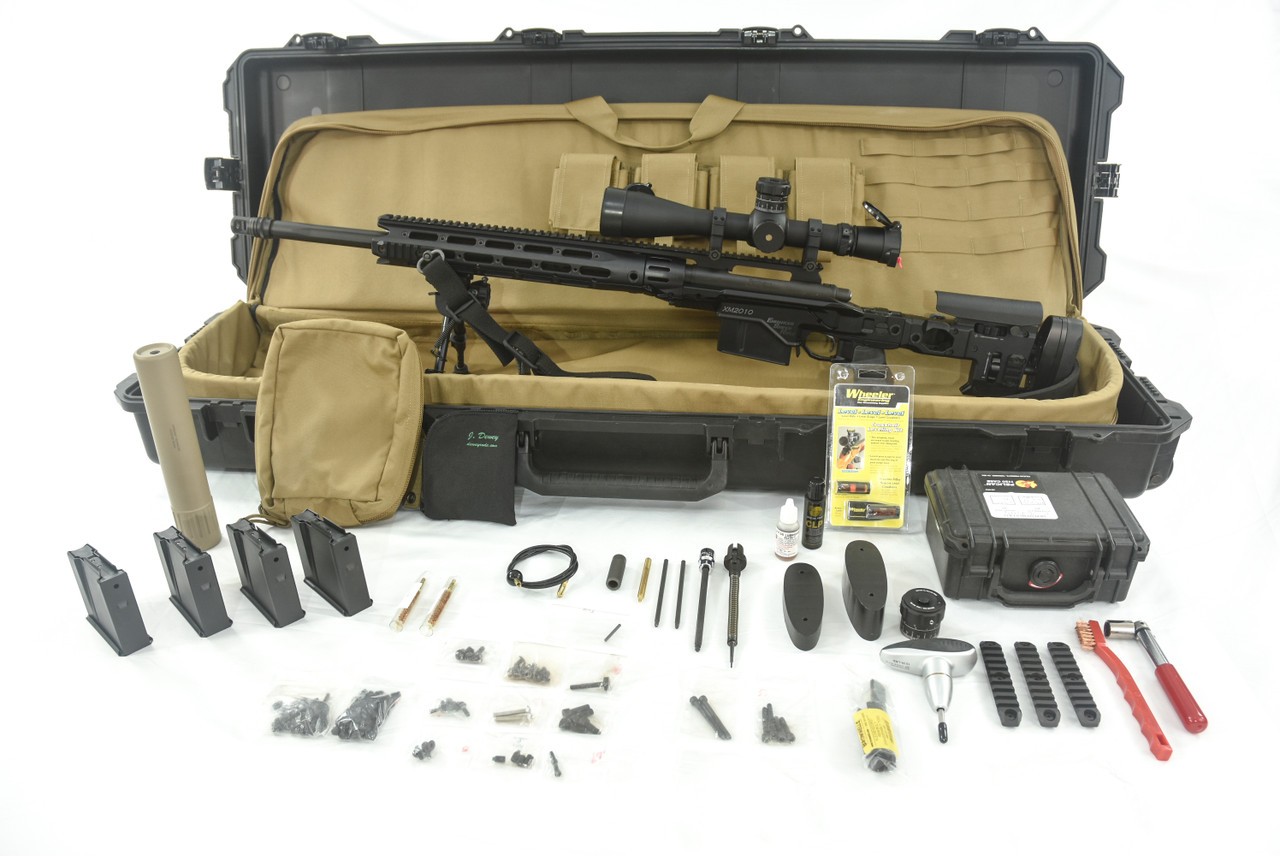
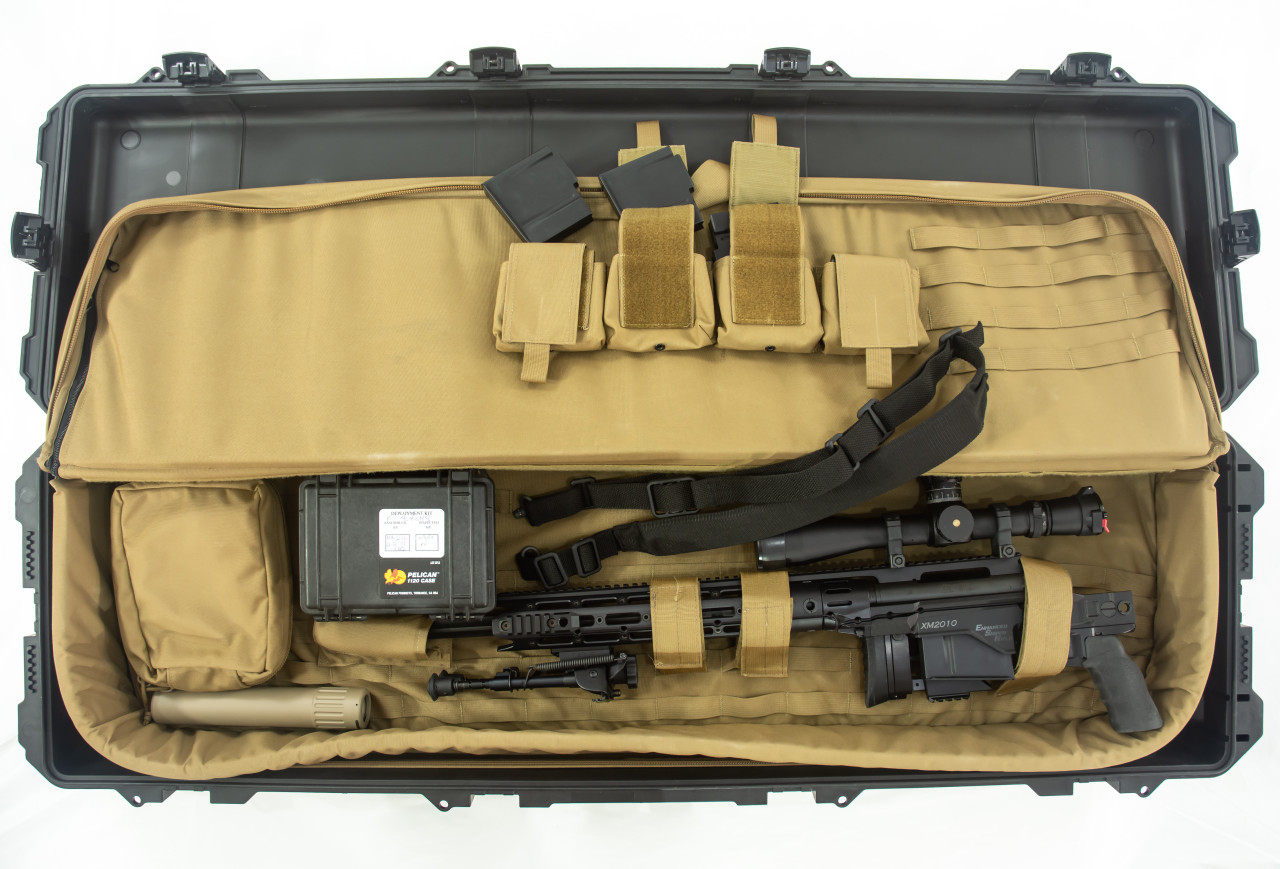
The XM2010 RACS Deployment Kit — Demo Unit
Complete deployment kit: rifle, Schmidt & Bender PMII, suppressor, and fitted Pelican case. Military-spec .300 Win Mag. In stock at CCC.
Shop the XM2010 Build →The M2010 Enhanced Sniper Rifle: the bet the Army placed in 1988.
How the U.S. Army took a 1988 bolt gun, kept one part, rechambered it to .300 Winchester Magnum, and bought a decade of reach in the mountains of Afghanistan — and why the deployment kit is the part collectors should be studying.

There is a habit in the gun world of treating new service rifles as clean-sheet inventions — a designer, a prototype, a contract. The M2010 Enhanced Sniper Rifle does not fit that story, and that is exactly what makes it worth understanding. It was not built from nothing. It was a conversion: the U.S. Army took the M24 Sniper Weapon System it had carried since 1988, kept a single component, and rebuilt everything else around a heavier cartridge. The one part it kept tells you why a decision made in the Reagan administration paid off twenty years later in the Hindu Kush.
We do not sell the M2010, and you cannot really buy a new one anymore — Remington Defense, the entity that built it, no longer exists. But the M2010 replaced the M24 Sniper Weapon System as the U.S. Army's standard bolt-action sniper rifle, and understanding it is part of understanding the entire modern American sniper lineage — from the M24 before it to the precision rifles we do build and stock today. We research the history of these weapons because that is how we help a customer choose the right platform, and the M2010's story carries more useful lessons than most rifles still in production.
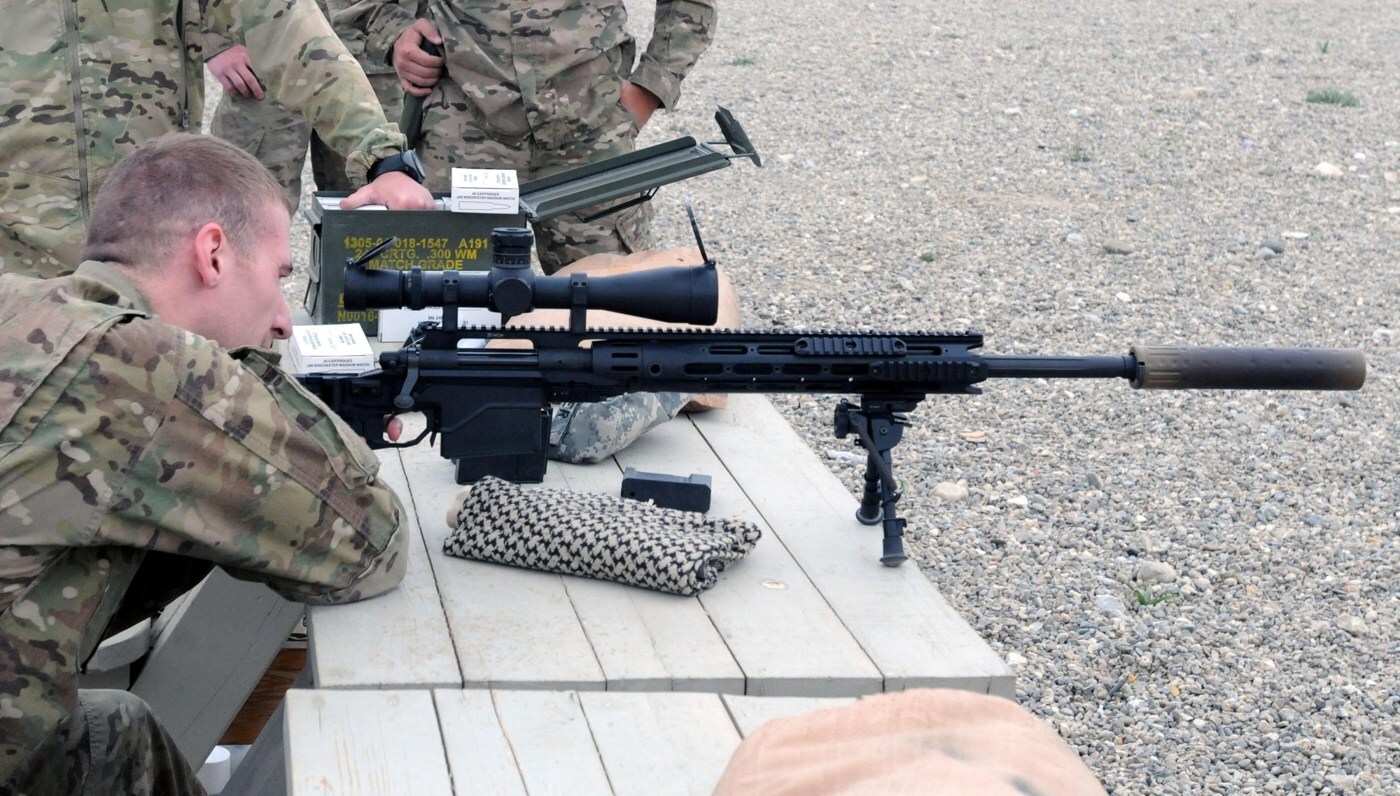
What the M2010 is, in one breath.
The M2010 Enhanced Sniper Rifle is the U.S. Army's .300 Winchester Magnum upgrade of the M24 Sniper Weapon System, built by Remington Defense beginning in 2010, fielded in Afghanistan from 2011, and superseded by the Mk22 around 2021. It exists because the Army needed first-round hits past 1,000 meters that the 7.62 NATO M24 could not reliably deliver.
The M24 it came from
The U.S. Army adopted the M24 Sniper Weapon System in 1988 as its standard bolt-action sniper rifle. Built by Remington around the Model 700, chambered in 7.62×51mm NATO, it served Army snipers across three decades of operations. It was an honest, accurate rifle, and for the engagement distances of its era it was enough.
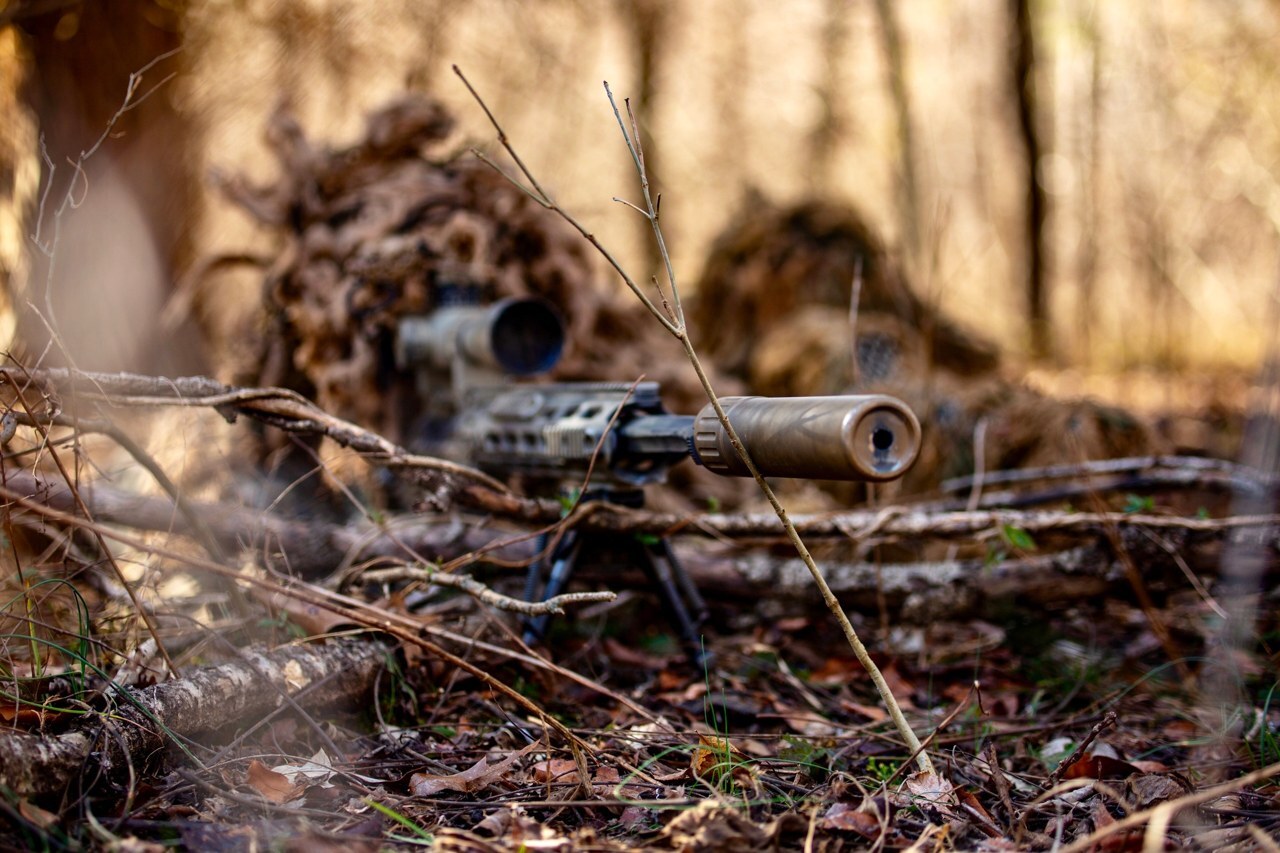
But the Army did something unusual when it specified the M24, and it is the single most important decision in this entire story. The Marine Corps M40 was built on the short Remington 700 action, correctly sized for the 7.62 NATO cartridge it fired. The Army instead specified the long action — a receiver sized for cartridges with an overall length up to 3.34 inches, considerably longer than 7.62 NATO requires. On paper that was wasted real estate. In practice it was a bet: the long action left room to rechamber the rifle to a magnum cartridge later, without buying a new receiver. The Army built future-proofing into a 1988 rifle, and then waited.
By the late 2000s the bet came due. Afghanistan's terrain forced engagements at ranges the 7.62 NATO round could not hold. The 175-grain match load goes transonic — loses stability and predictability — somewhere around 800–900 meters. Snipers were being asked for first-round hits well past that. The Army did not need a new rifle so much as a new cartridge in the one it already owned. The long action it had specified twenty years earlier made that possible.
The Army built future-proofing into a 1988 rifle, and then waited.
A conversion, not a clean sheet
In May 2009 the Army solicited bids not for a new sniper rifle but for a reconfiguration of M24 rifles already in inventory. The scope was specific: rebarrel and rechamber from 7.62 NATO to .300 Winchester Magnum, replace the Weaver-rail scope base with a modern MIL-STD-1913 Picatinny rail, fit an adjustable detachable-magazine chassis, add a quick-detach suppressor, and replace the day optic. On 20 September 2010, Remington won the contract — an arrangement to upgrade up to 3,600 M24 rifles, initially designated the M24E1 Enhanced Sniper Rifle.

Here is the detail clone builders should hold onto: on the Army's books, this was a conversion project, and the receiver was the only part retained from the original M24. Everything forward and aft of that receiver was new. Because the program depended on the supply of returnable M24s, and because not every receiver passed inspection, the final order settled at 2,558 rifles rather than the 3,600 ceiling. That is also why surviving examples carry a quirk collectors notice: the chassis are marked XM2010, while the receivers underneath are marked M24 — the recycled bones of the older rifle.
The designation walked through three names. It began contractually as the M24E1 Enhanced Sniper Rifle, was reclassified XM2010 — the X denoting developmental status, the 2010 marking the intended year of fielding — and was finally type-classified as the M2010 Enhanced Sniper Rifle when the X was dropped. You will see all three names in period sources, and they all refer to the same rifle at different points in its life.
There is a quieter virtue in that arrangement. Rebuilding around receivers the Army already owned — proven, paid for, already in the system — was cheaper and faster than tooling up a clean-sheet rifle, and it put a magnum-capable system in the field on a wartime timeline. The 1988 long-action decision made the shortcut possible; the conversion cashed it in.
Why .300 Winchester Magnum
The whole program turns on the cartridge. The Army's own framing was that .300 Winchester Magnum delivered roughly 50 percent more effective range than 7.62 NATO — pushing the rifle's reliable reach from about 800 meters to about 1,200 meters at one minute of angle. "Half again further" is the phrase that recurs in the period documentation, and it is the cleanest summary of the rifle's reason for being.
The .300 Win Mag occupies a deliberate middle ground. The .50 BMG Barrett M107 reaches well past 2,000 meters, but its accuracy — on the order of 2.5 MOA — suits it to materiel targets, not precise anti-personnel work. The .300 Win Mag stays supersonic past 1,200 meters, carries more energy downrange than 7.62, bucks wind better, and does it while holding the sub-MOA precision a sniper needs for a deliberate shot on a person. It is a more demanding cartridge to shoot and to supply, but the Army accepted that cost for the performance margin the terrain demanded.
The fielded service load was the A191 cartridge — the Mk 248 Mod 0, a 190-grain Sierra MatchKing hollow-point boat-tail. A heavier 220-grain load, the Mk 248 Mod 1, was developed to push .300 Win Mag toward 1,300-plus meters, but that round is associated with the Navy and Marine Mk 13 rifles; the public record indicates the Army continued to procure the 190-grain Mod 0 for the M2010. We flag that because it is commonly muddled online: the long-range potential of the cartridge and what the Army actually issued for this rifle are two different things.
The M2010, component by component
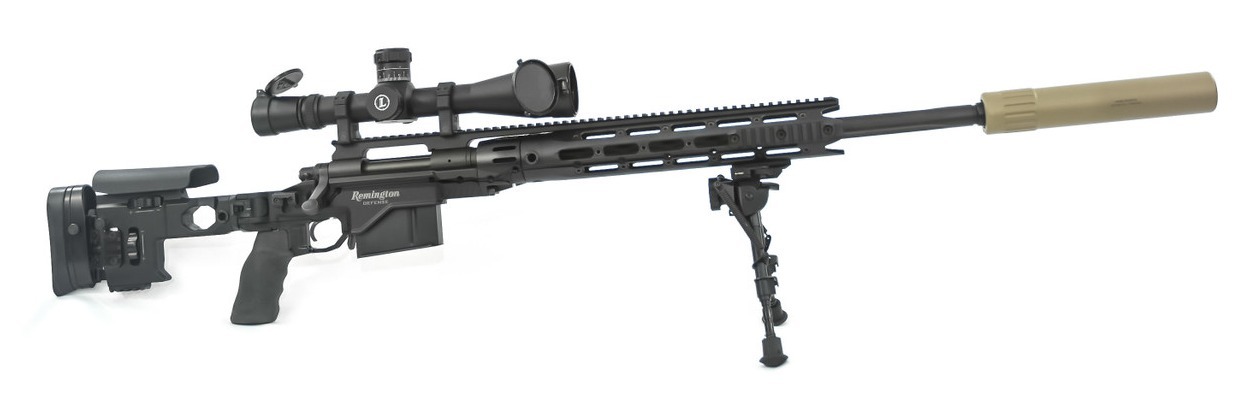

History aside, the rifle on the bench is a coherent system — and every part of it was chosen to feed the cartridge. Each major component below reflects the fielded specification. Where sources disagree, we note it.
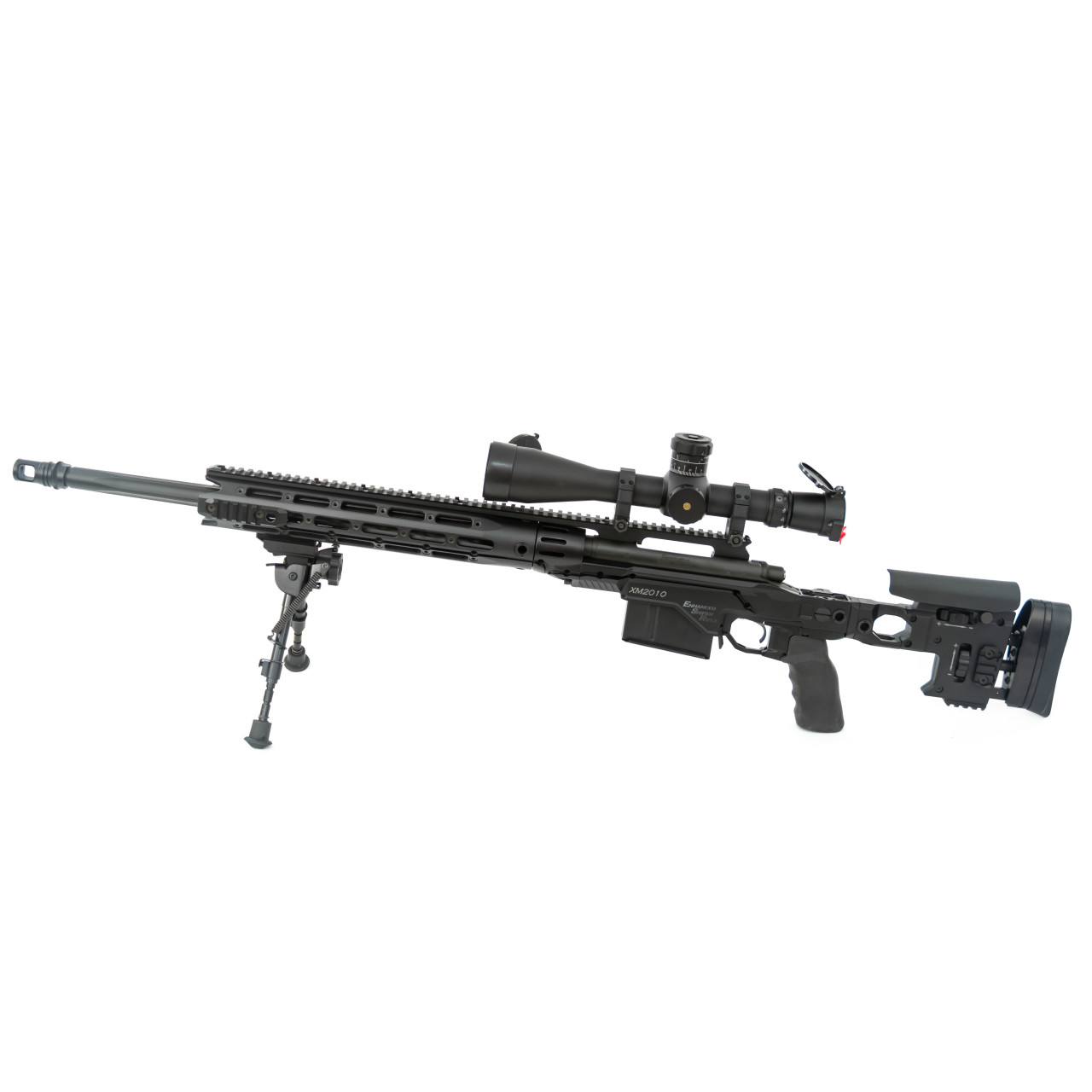
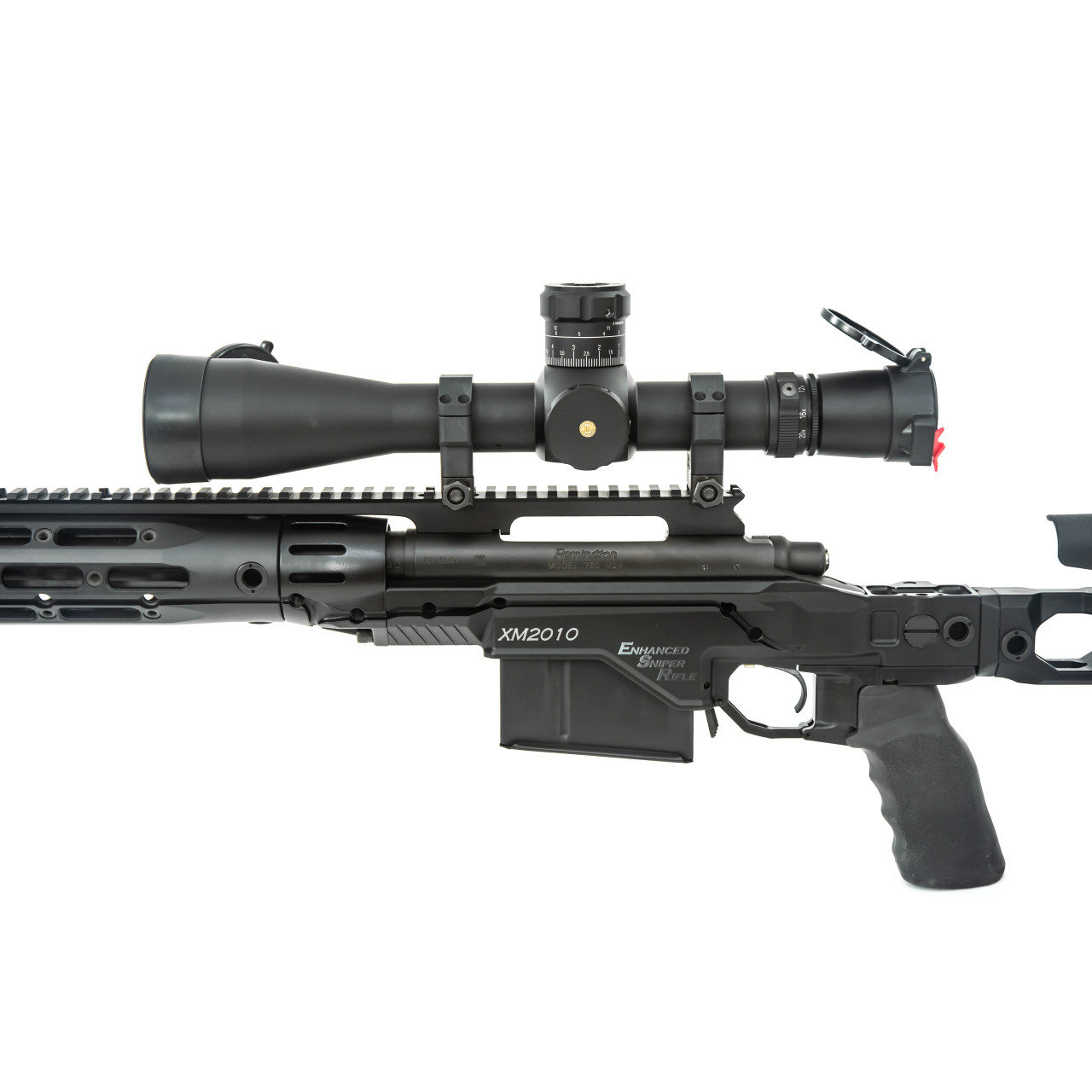
- Action. The bolt-action Remington 700 long-action receiver, retained from the donor M24 — the heart of the conversion and the one original part.
- Barrel. A 24-inch free-floating barrel with 5R rifling and a 1:11 twist, corrosion-treated for service life. Sources differ on the maker — some cite Obermeyer 5R, while a Remington program account says the barrels were made in-house — so the defensible statement is a Remington-produced, 5R-rifled, 24-inch barrel. "5R" refers to the five-groove rifling profile with sloped lands, prized for accuracy and easier cleaning.
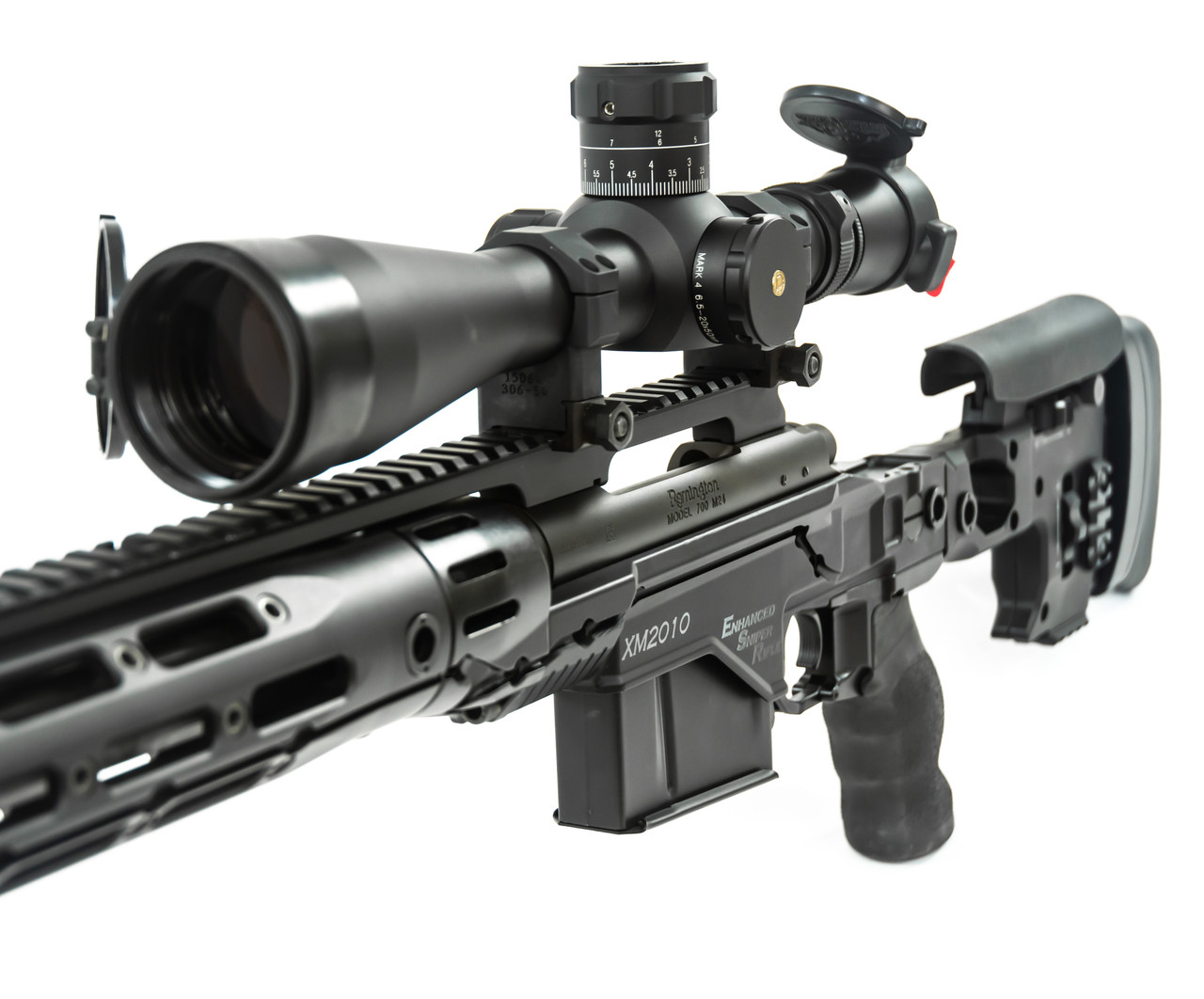
- Chassis. The Remington Arms Chassis System (RACS), machined from 7000-series aluminum, with a right-folding buttstock, adjustable comb height and length of pull, and removable Picatinny accessory rails. Worth a careful note: "RACS" here means Arms Chassis System — not the separate civilian "Accessory Chassis System" product that shares the acronym.
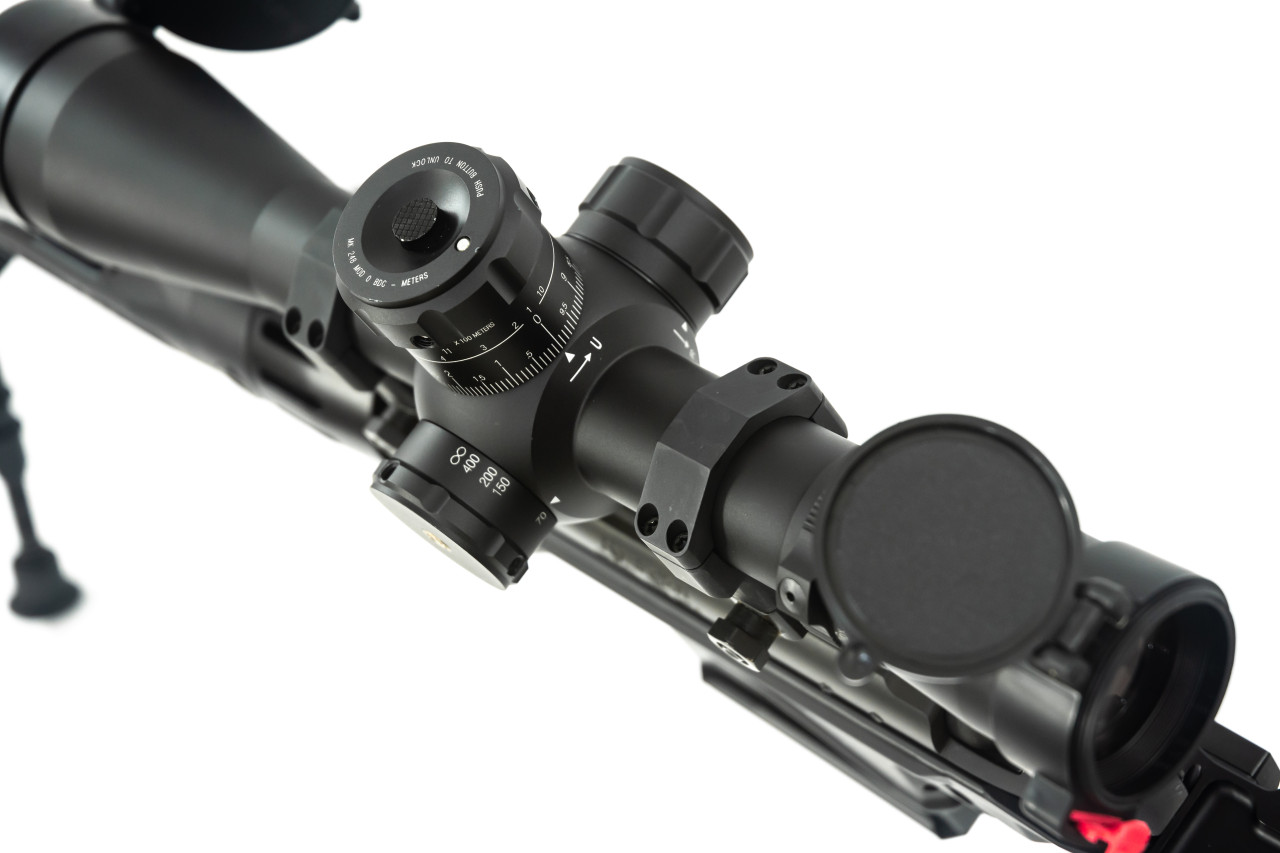
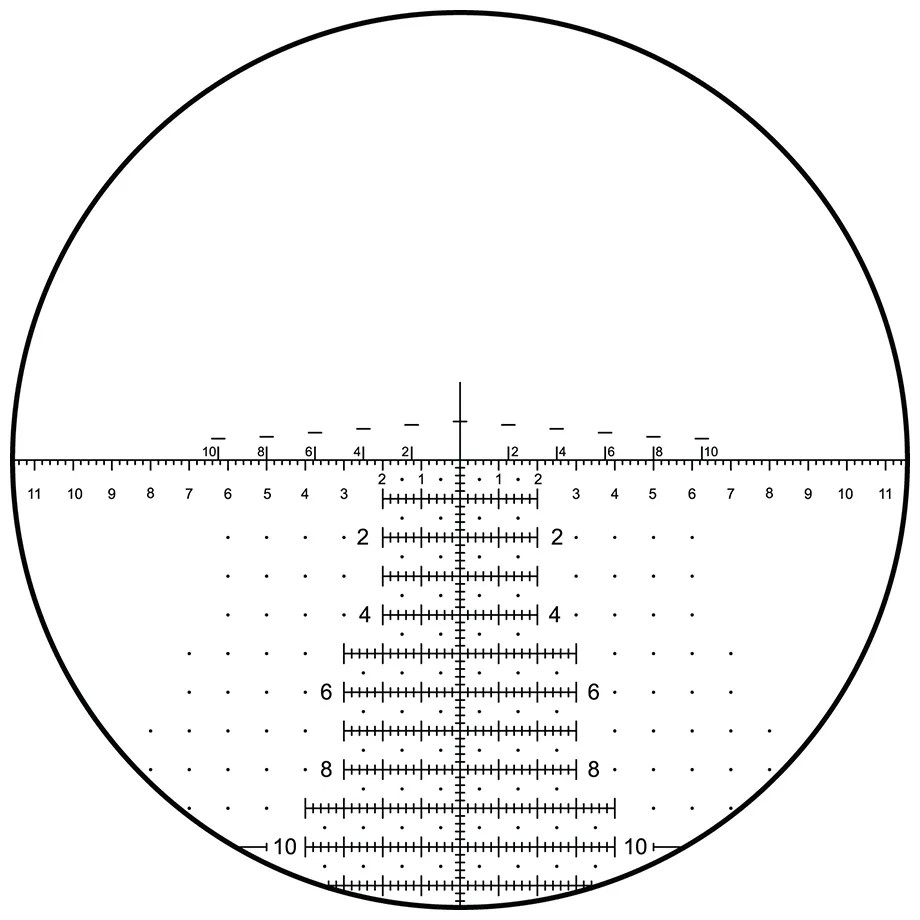
- Optic. The Leupold Mark 4 6.5–20×50mm ER/T M5A2 in a 34mm tube, first focal plane, with a Horus Vision H-58 grid reticle for holdovers. Fielded alongside clip-on night sights — the AN/PVS-29 or AN/PVS-30 — for the same rifle to work in darkness. That Mark 4 is long out of production; the role it filled is handled today by the long-range riflescopes we stock.
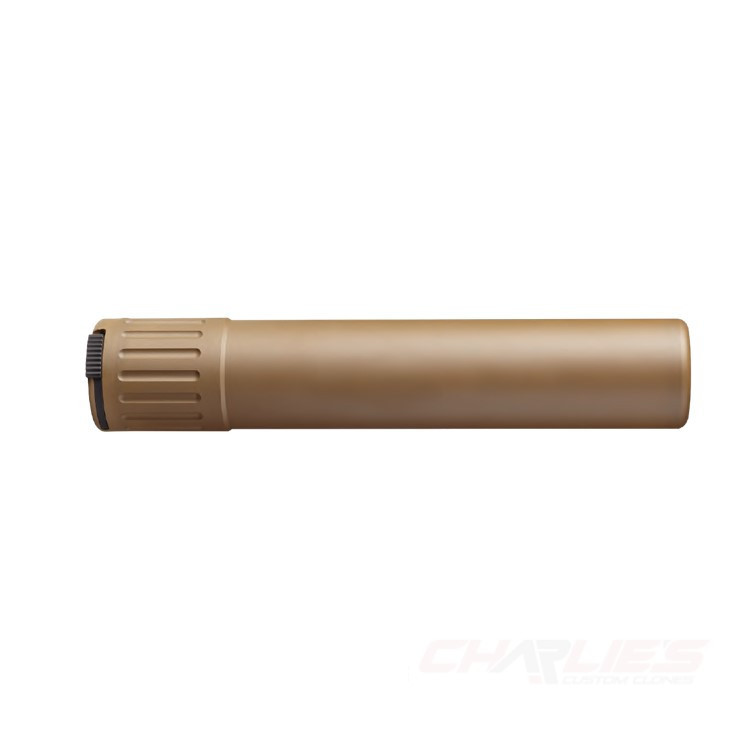
- Suppressor & muzzle. An Advanced Armament Corp (AAC) Titan-QD quick-detach suppressor, mating to an AAC muzzle brake that doubles as the QD mount. The brake stays on the rifle; the can comes on and off without losing zero — the same quick-detach logic now standard across the quick-detach suppressors we carry.
- Vital numbers. Roughly 12 pounds bare, about 46.5 inches long, a 5-round detachable box magazine, a sub-MOA accuracy requirement, and a stated effective range of 1,200 meters.

What the reach cost
Nothing is free. The .300 Win Mag that bought the M2010 its extra four hundred meters also burns barrels faster than the 7.62 NATO it replaced — a high-pressure magnum throat erodes on a much shorter clock, and an armorer plans for a rebarrel where the old M24 might have gone years. It kicks harder, which is real work across a long string of cold-bore shots, and it is heavier, longer, and more expensive to feed: a magazine of belted magnum is not a 7.62 basic load. We point this out not to knock the rifle but because the trade was deliberate: the Army weighed the logistics tail of a magnum cartridge and decided the terrain made it worth carrying.
The trade was deliberate: the Army weighed the logistics tail of a magnum cartridge and decided the terrain made it worth carrying.
The kit is the artifact
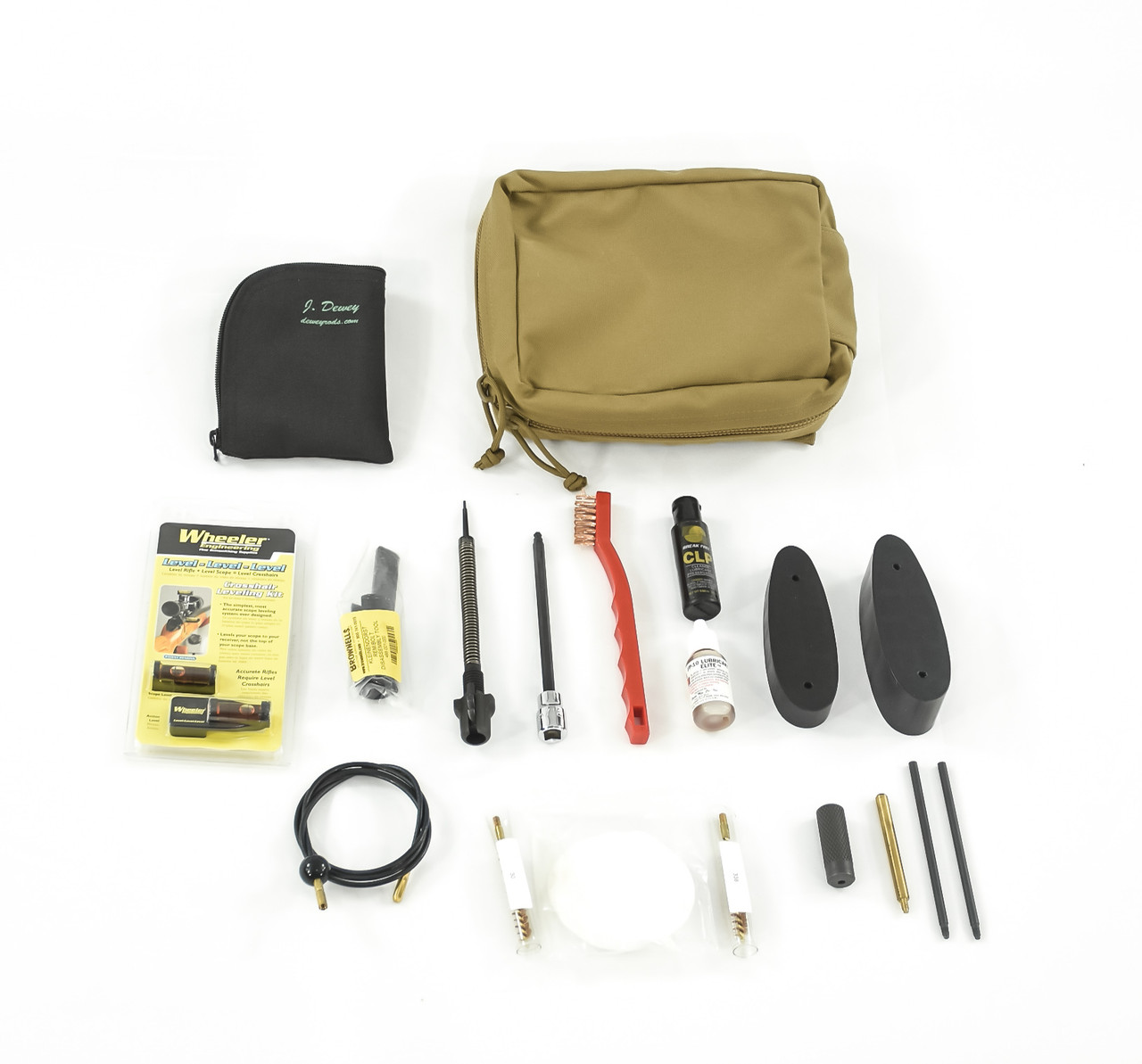
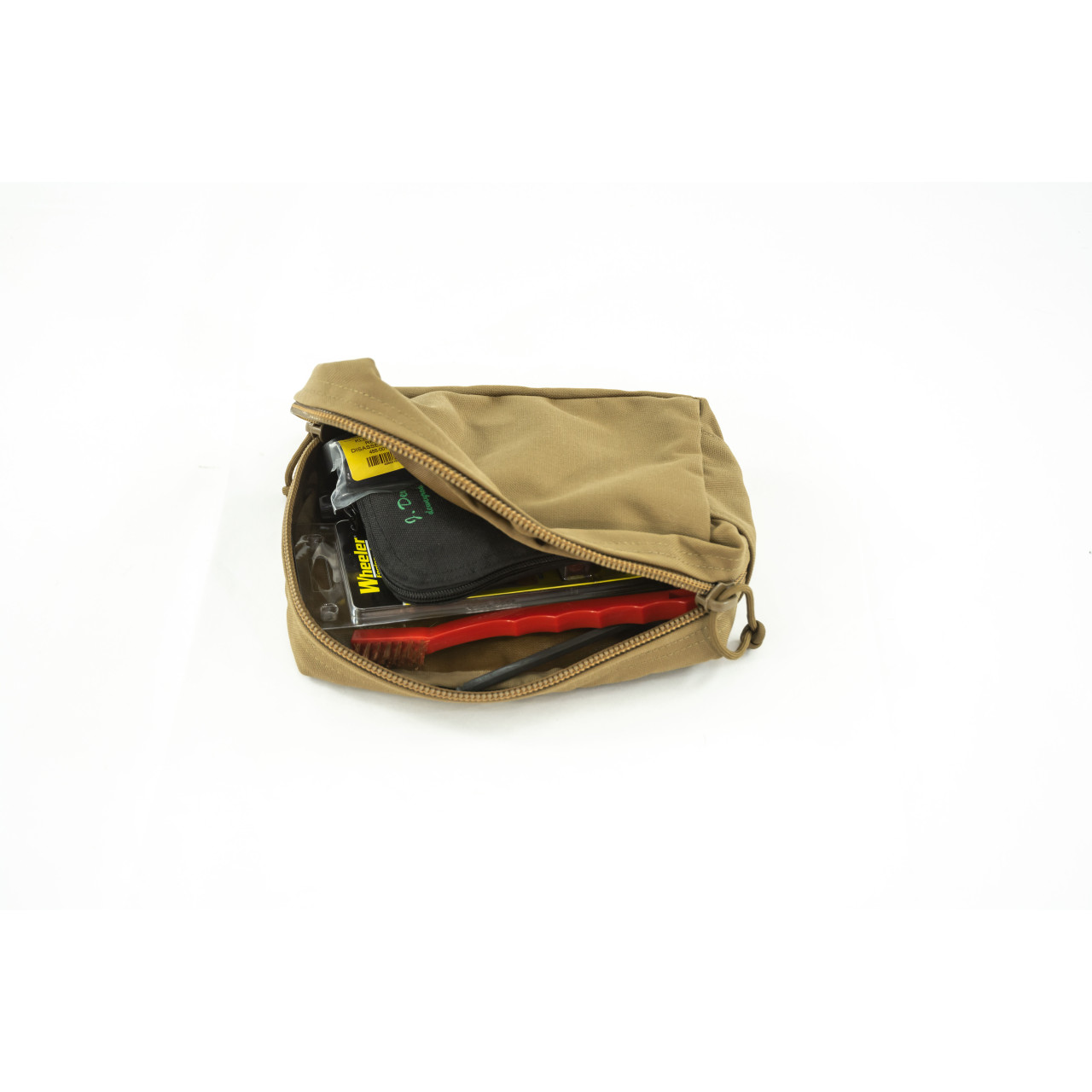
The M2010 deployment kit is the complete fielded system: the rifle, its Leupold Mark 4 optic, the AAC Titan-QD suppressor and muzzle brake, magazines, bipod, sling, and field-maintenance items, all fitted into a hard case so the system travels together and arrives zeroed. A sniper rifle is not issued as a bare rifle, and this is the part of the M2010 story that gets skipped most often. For anyone studying the platform, the kit is arguably more interesting than the rifle, because it documents exactly how the Army intended the system to be employed.
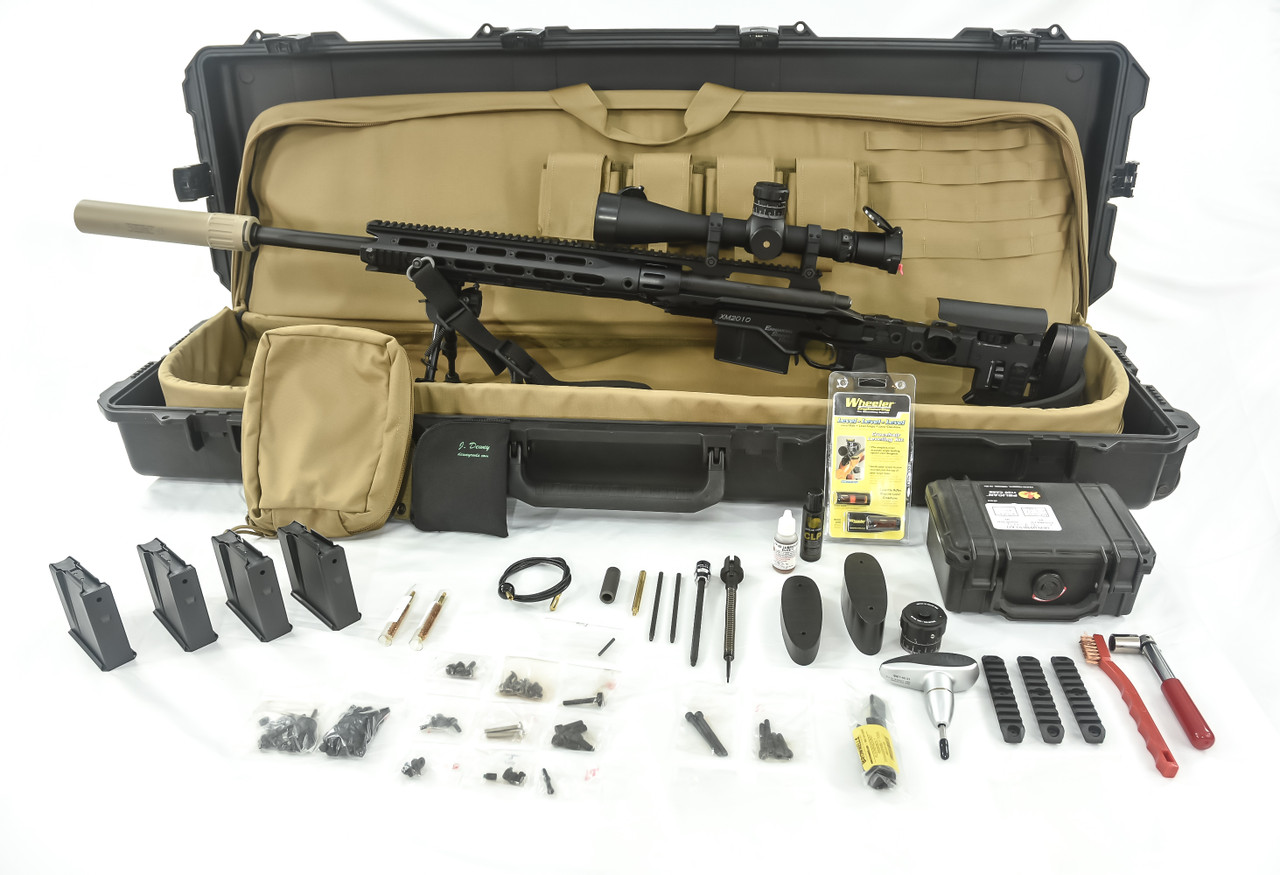
A complete kit pairs the rifle with its Leupold Mark 4 optic and rings, the AAC Titan-QD suppressor and its muzzle brake mount, the detachable magazines, a bipod, a sling, and the cleaning and maintenance items needed to sustain a .300 Win Mag barrel in the field. The fitted case is not packaging — it is mission equipment, sized so the folded rifle and every accessory travel together and arrive zeroed. The folding RACS stock matters here: collapse it and the whole system shortens enough to ride in a case or a pack, with the bolt handle captured rather than left to snag.
Own the Platform This Post Is About
Charlie's Custom Clones currently has an XM2010 RACS deployment kit — demo condition, complete with optic, suppressor, and the original hard case. If you've read this far, you already know what this rifle is. See the listing →
The fitted case is not packaging — it is mission equipment.
What turns a kit from a parts list into a record is correctness: the optic that shipped with that rifle, the suppressor logged against it, the foam cut to one configuration and no other. A scattered set of correct parts is a shopping list. A complete, case-matched kit is a primary source — it tells you, without a single document, exactly how the Army meant the system to go to war. That is why we treat the kit, not just the rifle, as the thing worth studying.
Afghanistan and the units that carried it
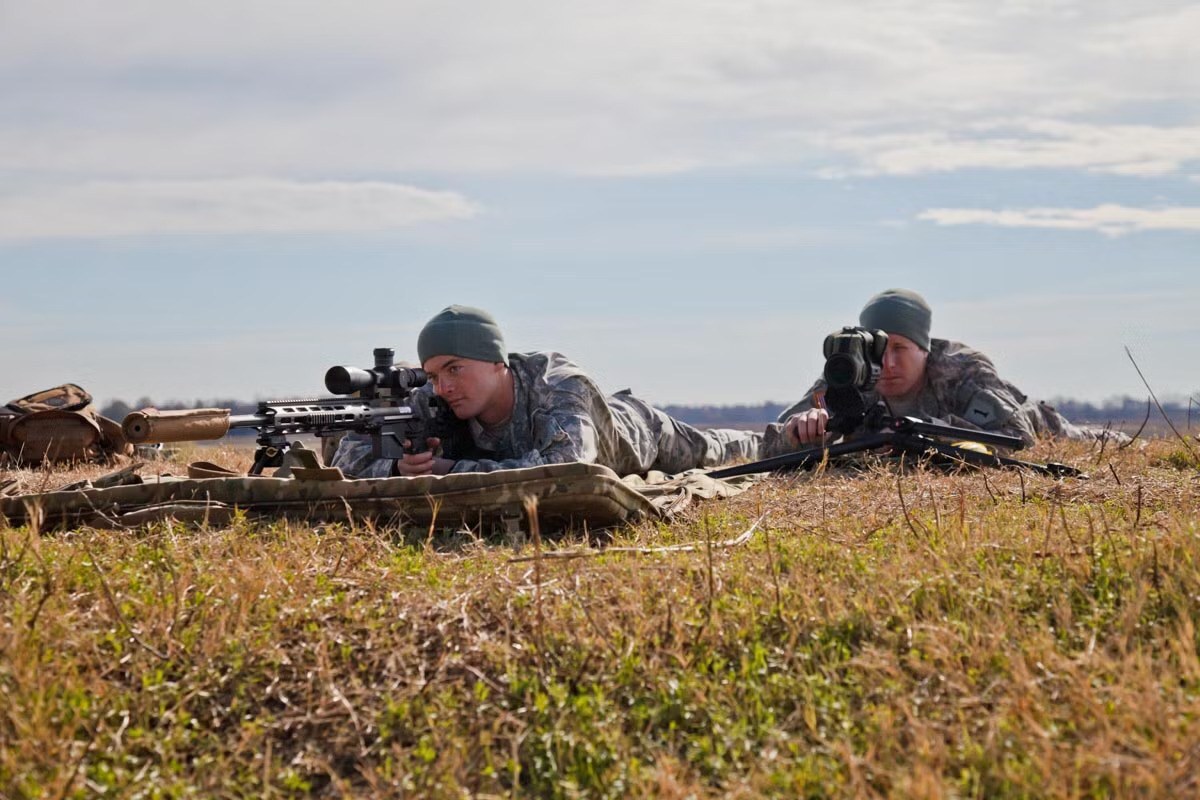
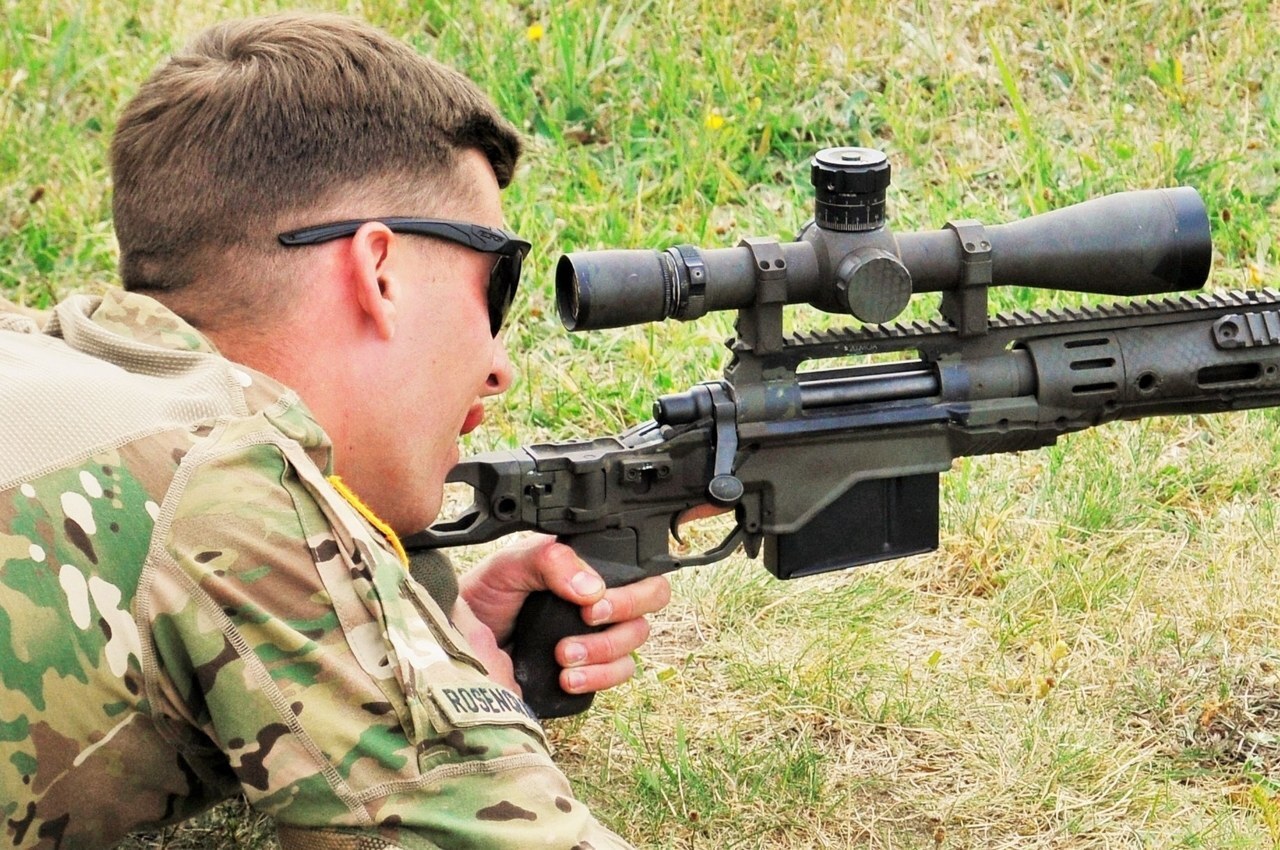
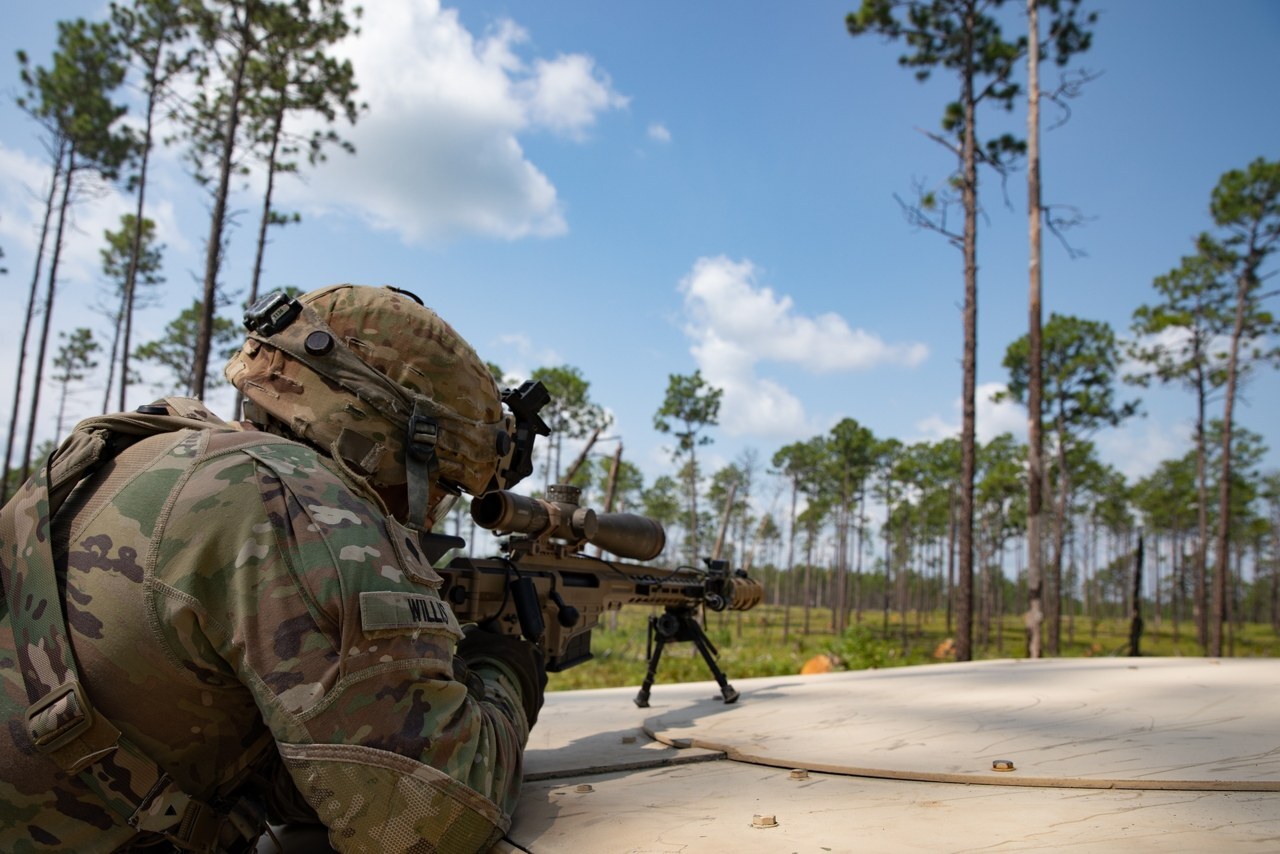
The M2010 Enhanced Sniper Rifle was the U.S. Army's general-issue precision bolt rifle from 2011 to roughly 2021, fielded across at least eight Brigade Combat Teams rather than to a single special-operations unit.
The rifle moved fast from contract to combat. The first XM2010s went to instructors at the U.S. Army Sniper School at Fort Benning on 18 January 2011, and the rifle saw combat use in Afghanistan beginning in March 2011. Fielding ran by deployment priority — units heading downrange first. By mid-May 2011, the initial fielding of around 250 rifles had been distributed across eight Brigade Combat Teams, and contemporary reporting described snipers making ridgetop-to-ridgetop engagements at roughly 1,000 meters — precisely the distance the cartridge change was meant to unlock.
A point of honesty for the serious reader: the M2010 was a conventional Army sniper rifle, issued broadly to line Brigade Combat Teams and their organic sniper sections. It is tempting to assign it to one famous unit — the Rangers, a specific Mountain Division brigade — but the public record describes a broad fielding across many BCTs rather than a single signature user, and we will not invent a cleaner story than the documentation supports. This was a Program Executive Office Soldier effort — an Army-wide precision-rifle program for the conventional force, not a special-operations procurement — which is the clearest reason it spread across so many brigades rather than living with one unit. The honest version: the M2010 was the Army's general-issue precision rifle of the early-to-mid 2010s, carried by Army snipers across the force in Afghanistan, not a narrow special-purpose tool.
Documented use ran well beyond Afghanistan, too: by 2017, U.S. Army snipers were firing the M2010 alongside NATO partners in Europe — soldiers of the 2nd Cavalry Regiment trained with it during Saber Strike 17 in Poland, one of many units that carried the rifle across its service life — the kind of NATO-partner precision work now done with the modern sniper rifles we build. By September 2012 more than 1,400 systems had been fielded under an urgent materiel release; the rifle reached Type Classification-Standard in July 2013 and Full Materiel Release that September. The 2,558th and final rifle was completed on 25 April 2014. From first contract to last rifle, the entire production life of the M2010 fit inside about three and a half years. The Army's own program office, PEO Soldier, managed the fielding.
M2010 vs Mk 13, and the Mk22 that replaced it
The M2010 is best understood as one node in a family tree, not a standalone. Two comparisons matter: the rifle that ran parallel to it on the Navy and Marine side, and the rifle that replaced it.
The Mk 13: the same cartridge, a different program
The M2010 and the Mk 13 are not the same rifle: both are .300 Winchester Magnum bolt guns of the same era, but the M2010 was the Army's RACS-chassis conversion of the M24, while the Mk 13 was the Navy and Marine program that migrated to an Accuracy International AICS chassis and a Stiller action in its later Mod 5 and Mod 7 forms. The M2010 stayed on the recycled M24 receiver in the Remington-built RACS chassis. Both families ultimately sit on the Remington 700 footprint — the divergence is in the chassis and the program, not the bones. Same caliber, same era, same mountains; two different institutional answers. The Marine Corps eventually consolidated much of its bolt-action precision capability onto the Mk 13 Mod 7 — a configuration we build and stock, including a complete deployment-case version — which is why a clone-minded reader will often see the M2010 and the Mk 13 discussed in the same breath. They are cousins, not the same rifle. If your interest runs toward the precision-AR side of the same era, that lineage continues in our Mk12 SPR clone builds. The Army's semi-automatic answer to the same reach problem — the KAC M110 SR-25 — ran alongside the M2010 in the same theaters.
The Mk22: the rifle that retired it
Your instinct that the M2010 is a precursor to the Mk22 is correct. Under the Army's Precision Sniper Rifle program, the service selected the Barrett MRAD — type-classified the Mk22 — to succeed the M2010, with fielding beginning around 2021. The Mk22 leapfrogs the M2010 in two ways the M2010 could not match from a fixed-cartridge bolt gun: it is user-convertible among 7.62×51mm NATO, .300 Norma Magnum, and .338 Norma Magnum by swapping barrels and bolts, and in its magnum chamberings it reaches meaningfully past the M2010's 1,200 meters. The M2010 was the last of the Army's "one rifle, one cartridge, fixed for life" sniper bolt guns; the Mk22 is the multi-caliber answer that made that approach obsolete. The same logic is available on our shelves today: the Accuracy International ASR deployment package with three barrels is the multi-caliber kit concept in current production, and the Barrett MRAD in .300 Win Mag is the civilian expression of the Mk22 platform itself.
A finite run, and the company that ended
Three facts explain why the M2010 is a study piece rather than something you will find on a dealer's rack. First, it was a finite government conversion: 2,558 rifles, built between 2011 and 2014, and no more. Second, Remington Defense announced in 2015 that it would offer some of its military products, the M2010 among them, to the civilian market — a brief and narrow window. Third, and decisively, Remington Outdoor Company entered bankruptcy in 2020, and in the breakup its assets were split among several buyers; the firearms operations were reorganized as RemArms, which builds Remington's classic sporting rifles and shotguns — not the M2010, and not the Remington Defense military line, which effectively ended.
Put those together and the result is straightforward: a small, fixed number of rifles, briefly offered to civilians, from a manufacturer that no longer exists in that form. The M2010 was never going to be common. It is now a closed chapter — which is exactly why getting its history right matters, because the rifle itself can no longer correct the record.
Questions people ask about the M2010
What is the difference between the XM2010 and the M2010?
They are the same rifle at different stages. XM2010 was the developmental designation — the X marks a system still in testing — and M2010 is the type-classified name after the rifle was standardized. The earliest contractual name was M24E1. Many fielded chassis remained marked "XM2010" even after standardization, so the markings and the designation do not always line up.
Is the M2010 just a rebarreled M24?
More than a rebarrel, but built on the M24's bones. The program retained the M24's long-action Remington 700 receiver and rebuilt everything else — barrel, chassis, optic, suppressor, magazine system. The receiver is the thread of continuity; the rest of the rifle is new. That is why it is correctly called a conversion rather than a new-production rifle.
Why .300 Win Mag instead of .308 / 7.62 NATO?
Range. 7.62 NATO match ammunition goes transonic around 800–900 meters, where its flight becomes unpredictable. Afghanistan's terrain demanded reliable hits past 1,000 meters. The .300 Win Mag stays supersonic past 1,200 meters and carries more energy and better wind resistance, which the Army summarized as roughly 50 percent more effective range than the M24's 7.62 NATO.
What does RACS stand for?
On the M2010, RACS is the Remington Arms Chassis System — the folding, adjustable 7000-series aluminum chassis Remington designed for the rifle. Be careful: there is a separate civilian product that expands RACS as "Accessory Chassis System." For this military rifle, it is the Arms Chassis System.
What replaced the M2010?
The Mk22 — the Barrett MRAD selected under the Army's Precision Sniper Rifle program, fielding from around 2021. The Mk22 is user-convertible among 7.62 NATO, .300 Norma Magnum, and .338 Norma Magnum, and in its magnum chamberings reaches past the M2010's 1,200 meters. It made the fixed-cartridge bolt gun obsolete.
Can a civilian own an M2010?
A limited number of M2010 rifles reached the civilian market after Remington Defense opened some military products to civilian sale in 2015. They are rare. The rifle is a serialized firearm and the suppressor is a separately regulated item; any transfer runs through a licensed dealer under the applicable federal and state process. If you are researching the platform for a collection, talk to a dealer who knows the configuration — we are happy to share what we know.
The rifle and the kit, up close
These are our own photographs of an M2010 Enhanced Sniper Rifle and its RACS deployment kit — the chassis, the action, the optic and reticle, the muzzle interface, and the kit components in the fitted case.



We do not sell the M2010, and after 2014 nobody really does. But it is a chapter in a lineage that is very much alive on our shelves — the Accuracy International, Cadex, and KAC precision rifles that carry the same logic of reach, repeatability, and a complete kit forward.
The M2010 is a closed chapter now — 2,558 rifles, one recycled receiver each, from a company that no longer exists. But the logic that built it — buy reach, keep the kit complete, plan for the rifle after this one — is still the right logic. It is the logic on our shelves, and researching where each platform sits in the family tree is the only honest way we know to help you choose your next one.
Explore precision rifles at Charlie's →© 2026 Charlie's Custom Clones, Mechanicsville, VA · 703.953.2882. Educational content on a historical military platform — not legal advice and not an offer of sale. Firearms and suppressors are serialized and/or federally regulated items; any transfer must go through a licensed dealer and comply with all applicable federal, state, and local law, which varies by jurisdiction. This article describes a platform no longer in production. Not a substitute for legal counsel.