
What You Need to Know About Forced Reset Triggers and Super Safties: a Comparison of Options
Posted by Mark on May 29th 2026
Last updated: May 29, 2026
The trigger your finger can't keep up with.
Forced reset is back. Two products belong on a clone-correct AR-15 in 2026. Here is what fits a Mk18, what fits a Spear LT, and what we leave in the box.
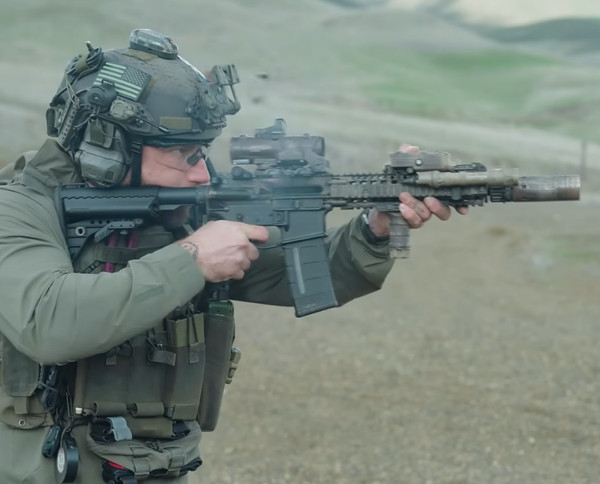
Pull the trigger on a forced-reset-equipped AR-15 and the rifle pushes back. Not recoil — the trigger itself. As the bolt cycles, a small piece of steel inside the lower drives your trigger finger forward, resets the sear, and dares you to pull again. You still pull for every shot. You just pull faster than your nervous system thought you could. On a 10.3-inch carbine, splits that used to live around .20 collapse toward .10. The gun sounds different. Your sights move differently. Inside 25 yards, on a steel plate, it is the single most-fun thing you can legally bolt onto an AR-15 in 2026.
It is also legal again — federally — after three years off the table. The products have matured. The category has settled. The three flagship options are all on the wall at Charlie's: the Atrius Super Selektor, the ASD ARC-Fire V2, and the Rare Breed FRT-15L3. Below: what each one feels like behind the trigger, what fits a clone-correct build, and the one lower-receiver check that kills most projects before they start.
Three picks at Charlie's. Three honest answers for three different builds.
If your lower is low-shelf and you can answer one question — "am I attached to my current trigger?" — you can pick a winner in about thirty seconds.
What This Thing Is
Strip the marketing language and a forced reset device does one job: it uses the energy of the bolt cycling back to shove your trigger finger forward, so the trigger is reset and ready before you've finished thinking about it. Your finger still pulls — every shot. The mechanism just removes the slowest step in the loop. Not a bump stock (the gun doesn't slide). Not a binary trigger (you don't get a second shot on release). Not full-auto (one pull, one shot, every time). Just a faster reset.
If you want the gunsmithing detail: on a stock AR-15, six things happen in sequence when you pull the trigger. Trigger rotates rearward. Sear surface releases the hammer. Hammer strikes the firing pin. Cartridge fires. Bolt carrier cycles rearward and cams the hammer back against spring tension; during that rearward stroke the disconnector hook captures the hammer at its secondary notch. The hammer stays caught for as long as you keep the trigger pulled. Only when you release the trigger forward does the disconnector hand the hammer off to the trigger's primary sear. That release-and-reset is the slowest part of the cycle for a human shooter. A forced reset device removes that step.
Three terms get used loosely in this space:
- Forced Reset Trigger (FRT). A complete drop-in trigger cassette that replaces the entire fire control group. The Rare Breed FRT-15L3 is the canonical example.
- Forced Reset Selector (FRS). A replacement safety selector that adds a third position; a cam interacts with the BCG and forces your existing trigger to reset. The Atrius Super Selektor and ASD ARC-Fire V2 both live here. Your trigger stays.
- Binary trigger. A separate category — fires once on pull, once on release. Different mechanism, different state-law posture, not the topic of this guide.
Why Your Lower Matters
Look up into the rear of an AR-15 lower receiver's fire control pocket and you will see a flat floor behind the trigger. The height of that floor is the "shelf." A low-shelf lower removes more material; a high-shelf lower leaves more. A high-shelf lower has an integrated block of aluminum that exists to prevent installation of M16 auto-sear components. That same block of aluminum is what fouls an FRS trip arm or interferes with an FRT cassette's mechanism clearance. Before you buy any product in this category, confirm you have a low-shelf lower — it is the single highest-impact compatibility decision in the whole build.
Two-second field check: strip the lower, drop in a hammer and trigger on their pins, and look at the rear wall of the FCG pocket behind the hammer. If the floor sits roughly level with the top of the trigger pin boss — a clean, deep pocket with no shoulder rising up behind the hammer's arc of travel — you are almost certainly low-shelf. If you see an obvious raised step or block of aluminum sitting noticeably higher than the trigger pin boss, that is the high-shelf land and you are done before you start. If you want a number, calipers from the top of the trigger pin hole to the top of the rear shelf will tell you: roughly 0.330 in. or less is low-shelf, roughly 0.400 in. or more is high-shelf. Anything in between, call us before you order.
The Colt question. The most common high-shelf lower the CCC customer brings us is the factory Colt LE6920 / 6920-pattern lower, particularly older production runs — Colt deliberately spec'd these with the auto-sear-blocking shelf as a regulatory hedge. If your clone build is anchored on one of those Colt lowers, an FRT or FRS is not going to drop in without machining work. Newer Colt M4 Carbine production and the SOCOM-marked M4A1 lowers run differently lot to lot, so the field check above still rules. For builds anchored on a modern Aero Precision M4E1, a BCM, an LMT, or a Geissele Super Duty lower, you are almost certainly clear.
- Low-shelf / M16-cut lower. High-shelf lowers will not run any product in this guide without custom milling. See Fig. 2.
- M16-profile BCG (Rare Breed FRT-15L3 only). The relieved underside is what gives the locking bar room to work.
- H2 / H3 / A5 buffer (or H2.5 for ARC-Fire). Standard carbine buffer cycles the carrier too fast and pushes the reset out of time.
- Anti-walk pins. Shipped with the FRT-15L3; required, not optional. The cyclic side-load will fret out standard pins over time.
Talk to a builder before you buy.
Send us a photo of your fire control pocket. We'll tell you whether you're low-shelf in about a minute — before you spend money on a part that won't fit.
Ask a builderAtrius Super Selektor
In Stock at Charlie's
A three-position selector built on a refined version of the Super Safety operating principle. The force path is short and entirely mechanical: the rearward stroke of the BCG cams a single-piece trip arm pinned inside the selector body, the trip arm pivots downward into the FCG pocket, and its lower face contacts the rear surface of the trigger tail — levering the trigger forward into positive reset before the carrier returns to battery. Available as a single-side or ambidextrous unit. Construction is heat-treated 4140 steel.
Clone-build note. The Atrius ships with selector levers profiled to look like a standard military-issue safety. Installed in the lower, the rifle keeps its clone-correct silhouette — nothing on the outside of the gun telegraphs "this has a forced reset selector." For a Charlie's clone build — a Mk18, an M4A1, a Block II — that visual fidelity matters.
The Atrius is the lowest-cost serious option on the table, and it keeps the trigger you already paid for. The mechanism is dead-simple — one trip arm, one cam surface, no internal multi-piece linkage. That simplicity is also its install advantage: parts count is low, the failure modes are visible from the outside of the gun, and the unit is straightforward to pull and inspect. For an AR-15 owner running a mil-spec trigger (ALG QMS/ACT, BCM PNT, PSA EPT, Aero Precision FCG, or any factory single-stage with a flat square trigger tail), the Atrius is the most cost-efficient way into the category.
The standard Atrius FRS wants a mil-spec trigger with a fully squared tail. The Geissele SSA, SSA-E, and SD-3G in factory form are not compatible with the standard SKU (see the trigger-tail geometry sidebar below). Atrius offers a separate G-Lever variant for Geissele triggers.
From the bench. Most owners end up doing minor work on the trigger tail for reliable function. The last Mk18 clone we fit one to ran clean by the second mag: we dressed the trigger tail flat on a stone, set the rifle up with a Sprinco yellow recoil spring and an H3 buffer, and let it walk. Budget a bench session and a couple of cheap mags of ball ammo — not a Saturday — and the part settles in.
Every FRS that drives reset by levering on the trigger needs a clean, flat contact patch on the rear of the trigger body. Mil-spec triggers oblige: the tail is a roughly square, flat-faced shelf the trip arm can land on solidly. Geissele triggers don't. The SSA, SSA-E, and SD-3G family use a contoured, hooked tail profile — engineered for their two-stage sear geometry, not for an outside lever — so a flat-faced trip arm slides off the curve. That is why the standard Atrius does not run a Geissele, why Atrius's G-Lever exists, and why the ARC-Fire's clutch — which doesn't ride the trigger tail at all — works with a Geissele out of the box.
When I replaced my mil-spec spring with a Sprinco yellow spring and swapped in a stock H3 buffer, it finally ran right.
T RousVerified Atrius buyer, Feb 2026 · on what "minor tuning" actually means
This is the cleanest illustration of what "minor tuning" actually means in this category. A specific buffer change and a specific spring change to get reliable function. The Atrius is not a fit-and-forget upgrade — it is a tuning device that rewards a deliberate buffer-and-spring iteration session, particularly on an 80% lower or a short-barrel host. Budget the bench time alongside the part cost.
ASD ARC-Fire V2
In Stock at Charlie's
AS Designs takes a different engineering path. Instead of a single trip arm bearing on the trigger tail, the ARC-Fire uses a patent-pending multi-piece Active Reset Clutch: an internal cam, a transfer lever, and a detent bar that together decouple the forced-reset force from the trigger-pull force. There are no springs in the reset mechanism — reset timing is driven entirely by cam geometry against the BCG. Mechanically that decoupling matters: spring-driven trip arms add a force component to every pull that varies with spring fatigue and dwell, while a pure-cam clutch keeps perceived pull weight closer to the host trigger's native value and makes reset timing repeatable shot-to-shot. Wear surfaces are M2 tool steel — chosen because M2 holds an edge under the high-cycle hammering these mechanisms see — with a DLC coating to drop sliding friction at the cam/lever interface. The body and detent components are 4140. The ambi kit ships with a compatible curved trigger included.
Clone-build note. Per the AS Designs spec sheet the ARC-Fire V2 ambi kit comes stock with mil-spec selectors — meaning the levers on the outside of the lower are visually indistinguishable from a standard mil-spec ambidextrous safety to anyone glancing at the rifle. For a clone build where the visual answer needs to be "this is a Mk18" or "this is a Block II," not "this is a forced-reset gun," that matters. The ARC-Fire disappears into the build. Compare this to a Rare Breed cassette, which is mechanically obvious the moment anyone field-strips the rifle, or to a no-name Super Safety clone with a flag-tipped lever that broadcasts itself at fifteen feet. The ARC-Fire is the rare FRS that respects a clone-correct aesthetic.
Genuinely cross-platform. If you are running anything other than a pure AR-15, the ARC-Fire is currently the only credible FRS option. The compatibility list:
- AR-15 (DI) with any compatible trigger — including the Geissele SSA, SSA-E, SD-3G, SD-E, SD-C, and G2S in factory configuration, plus ALG QMS and ACT, BCM PNT, PSA EPT, Aero Precision FCG, and CMMG FCG.
- AR-9 blowback — pistol-caliber carbines on AR-15-pattern lowers.
- Sig MCX and MPX — short-stroke piston platforms (tuning required).
- SCAR, MP5, G3, BRN-180, JAKL and additional hosts per ASD's current compatibility list.
The cross-platform list is the differentiator. The asterisk: the ARC-Fire works on all those hosts but does not behave identically on each. Reset feel on a properly tuned MP5 is softer and more rhythmic than on a 10.3-inch carbine — different cyclic timing, different felt cadence. The MCX and MPX are short-stroke piston guns with lighter carriers and a sharper gas impulse; expect a bench session to find the recoil-spring weight that gives consistent reset without overdriving. SCAR is its own animal. None of this breaks the product. It is the honest version of "cross-platform" — the mechanism works across all of them; your tuning work resets each time you change hosts.
From the bench. We have one of these on a customer's MCX Spear LT in the back and one on a clone Mk18 on the shop wall. They ran on different recoil springs — the Spear LT took an afternoon to dial — and once dialed they both run. The list isn't theoretical to us; we install these.
The Rare Breed FRT-15L3
In Stock at Charlie's
The original. A complete fire control group cassette that replaces your existing FCG entirely. Available in curved or flat shoe. Semi-auto pull measures roughly 4–4.5 lb; reset mode roughly 5.5–6 lb. The geometry requires a full-auto-profile M16 BCG — the relieved underside of the carrier gives the cassette's locking bar room to engage. Anti-walk pins ship with the cassette and are required, not optional.
It is the simplest path to forced reset on an AR-15. Pop the existing FCG out, drop the cassette in, install the selector and anti-walk pins, swap to an H2/H3 buffer, go. Most installs take 10 to 15 minutes. The trade-off: you give up your existing trigger to do it. If you have a Geissele SSA-E in the lower, that comes out. For a clone-build customer who wants the all-in-one cassette and doesn't have a trigger they're attached to, this is the cleanest path in the category.
Buy authorized. If you go this direction, buy from Charlie's, direct from Rare Breed, or from a verified authorized dealer. Counterfeit cassettes exist in the market and a knockoff is how you brick your rifle. The patent landscape in this category is also active and being enforced — one more reason to buy from a source you can call back.
A few other names you will see while shopping. We are not ignoring them; here is the short version:
- Triggered Company Disruptor (formerly Partisan Triggers). The most credible non-Rare-Breed full-FRT cassette. Proven design, USA-made.
- LAT trigger. Newer FRT cassette entrant; offered standalone and as a kit with an SBW ambi selector.
- Mars Super Safety. Budget FRS option with a mil-spec-look selector profile. Counterfeit risk is real at the low end of this market — verify the source before you buy.
- Dogwood Armory FKT-15. Another FRT cassette in the market.
None of these have displaced the Atrius, the ARC-Fire V2, or the Rare Breed FRT-15L3 as the three products we put our name behind for a CCC clone build.
Which One Is Right For Your Build?
Two honest questions. One answer. The decision is straightforward once you've confirmed the four checklist items above.
- →You have a mil-spec trigger you like.
- →You enjoy fine-tuning, accept Dremel work on the trigger tail.
- →You want the lowest cost into the category.
- →You're running a pure AR-15, not a multi-platform safe.
- →You own a Geissele SSA, SSA-E, SD-3G and want to keep it.
- →You run multiple hosts: MCX, MPX, MP5, SCAR, JAKL.
- →You want the more engineered (and more expensive) solution.
- →You're building a Mk18, M4A1, or Block II and want it invisible.
Forced reset is a recreational and close-range capability tool. Not a precision tool. The practical accuracy benefit at distance is minimal.
Garand Thumb · paraphrasedApril 2025 long-form FRT-15 review · the highest-trust voice in the category
Forced Reset Trigger FAQ
Are forced reset triggers legal?
Federally, yes — following Garland v. Cargill, NAGR v. Garland, and the 2025 DOJ–Rare Breed settlement. State and local rules vary; see the footer for the non-exhaustive restricted-jurisdictions list and confirm your state before you purchase.
What is the difference between an FRT and an FRS?
A Forced Reset Trigger (FRT) is a complete drop-in trigger cassette that replaces your fire control group entirely — the Rare Breed FRT-15L3 is the canonical example. A Forced Reset Selector (FRS) is a replacement safety selector that adds a third position; a cam interacts with the bolt carrier and forces your existing trigger to reset. The Atrius Super Selektor and ASD ARC-Fire V2 are FRSs — you keep your trigger.
Will a forced reset trigger fit my lower receiver?
Only if your lower is low-shelf (M16-cut). High-shelf lowers — including many factory Colt LE6920 / 6920-pattern lowers, older PSA production runs, and older pre-2018 aftermarket — have an integrated block of aluminum that fouls every product in this category. Aero Precision M4E1, BCM, LMT, Geissele Super Duty, and most modern aftermarket lowers run cleanly. See the field check in “Why Your Lower Matters” above, or call us before you order.
Do I need a special bolt carrier group?
For the Rare Breed FRT-15L3, yes — you need a full-auto-profile M16 BCG. The relieved underside of the carrier gives the cassette's locking bar room to engage. A semi-auto carrier's full underside blocks it and the cassette will not function. For FRS products (Atrius Super Selektor, ASD ARC-Fire V2), a standard mil-spec BCG works.
What buffer do I need?
H2 or H3 for the Rare Breed FRT-15L3 (A5 buffer system on rifle-length builds works too). H2 or H3 for the Atrius Super Selektor. H2.5 for the ASD ARC-Fire V2. A standard carbine buffer cycles the carrier too fast and pushes the reset out of time — you get doubles, light strikes, or a trigger that locks up mid-string.
Can a forced reset trigger run on platforms other than the AR-15?
The ASD ARC-Fire V2 is currently the only credible cross-platform option. It runs on AR-15 (DI), AR-9 blowback, Sig MCX, Sig MPX, MP5, G3, BRN-180, JAKL, SCAR, and additional hosts per ASD's current compatibility list. The mechanism works across all of them; tuning resets each time you change hosts because cyclic timing and gas impulse differ between direct impingement, short-stroke piston, and roller-delayed platforms.
Does it work with my Geissele trigger?
The ASD ARC-Fire V2 works with Geissele SSA, SSA-E, SD-3G, SD-E, SD-C, and G2S triggers in factory configuration. The standard Atrius Super Selektor does not — the Geissele's contoured tail profile slides off the Atrius trip arm. Atrius makes a separate G-Lever variant for Geissele compatibility. The Rare Breed FRT-15L3 replaces your trigger entirely, so this question doesn't apply.
Which one should I buy?
If you already have a mil-spec trigger you like, the Atrius Super Selektor is the best-value path in. If you run a Geissele trigger or a multi-host safe (MCX, MPX, MP5, SCAR), the ASD ARC-Fire V2 is the only credible choice. If you want the simplest all-in-one drop-in cassette and you're not attached to your current trigger, the Rare Breed FRT-15L3 is the cleanest install. All three are on the wall at Charlie's. Call us if your build is unusual and we'll talk you through it.
Where Charlie's Stands
We sat the first wave out. We watched the courts, watched the counterfeits, and watched first-generation parts come back across the bench with cracked trip arms and tuning notes written on masking tape. Three products survived that. The Atrius, the ARC-Fire, and the Rare Breed are on the wall at Charlie's because we have fit them, run them, and pulled them back out to look at the wear surfaces after a thousand rounds. The picks are honest, and so is the order in which we'd recommend them — covered above.
If you have a clone build in the safe and you're curious about what one of these does to a third magazine at twelve yards, call the shop. We'll tell you which one belongs on your rifle. Sometimes the answer is neither — a clean Geissele SSA-E or a mil-spec FCG is the right answer on a rifle that needs to work the first time, every time. Forced reset is a capability, not a foundation.
Call us at 703-953-2882. We'll tell you when a product won't fit, when to keep your money, and when the next step is something other than a forced reset selector entirely.
View all three at Charlie's Get a build consultation© 2026 Charlie's Custom Clones · Mechanicsville, Virginia · 703-953-2882 · Educational content, not legal advice. Verify current federal, state, and local law before purchasing any rate-of-fire-related component. Forced reset triggers, forced reset selectors, binary triggers, and other rate-of-fire devices are restricted or banned in some form under state or local law in CA, CT, DE, FL, HI, IL, MA, MD, MN, NJ, NV, NY, OR, RI, WA, and DC. Definitions ("trigger activator," "rapid-fire device," state machinegun definitions) vary by jurisdiction and are subject to active or pending litigation; this list is non-exhaustive and may change. Not a substitute for legal counsel in your jurisdiction.